From cattle to chili: The step-by-step math of dryland crop transitions
Drought is forcing pastoralists in Kenya's drylands to rethink their livelihoods. Here is what it takes to convert a parched plot into a profitable pepper farm.
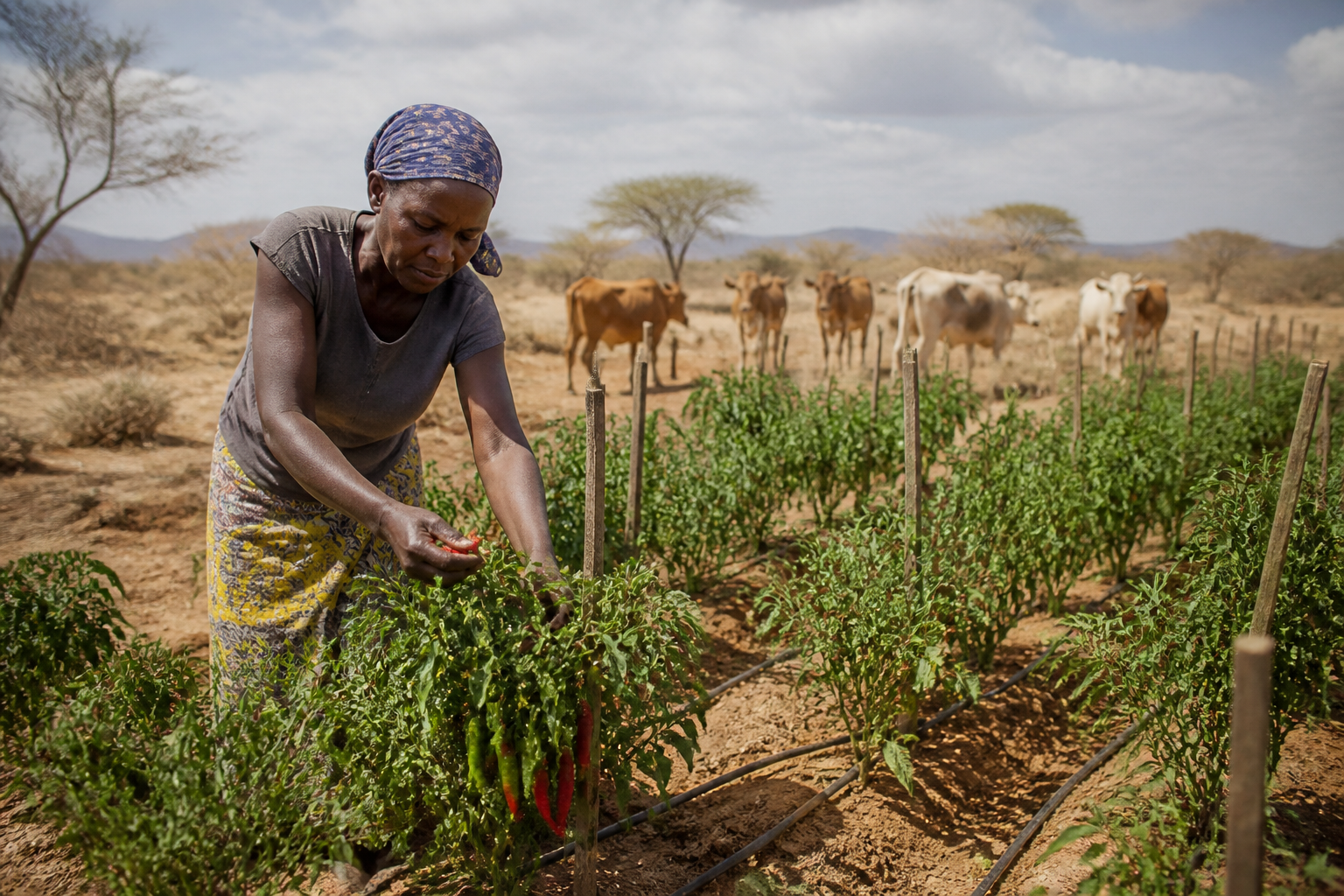
For generations, families surviving on arid and semi-arid lands have relied on livestock as their primary bank account. But recurring, severe droughts are wiping out herds in days, forcing smallholders in places like Kitengela, Kajiado County, to rethink how they earn a living. (Nation)
Converting a dryland smallholding from traditional pastoralism to high-value pepper farming offers a path to financial stability, but it is not as simple as dropping seeds into parched dirt. Success requires specific equipment, secure water management, precise crop selection, and direct market links.
Here is a step-by-step breakdown of the operational and resource requirements needed to make the leap from dying livestock to profitable chili harvesting, based on real-world farming cases in Kenya's drylands.
M360 News · Data
How to transition from livestock to dryland chili farming
Key operational steps for converting dryland smallholdings from pastoralism to pepper farming
- Step 1Securing water and drip infrastructureInstall drip irrigation networks to cut water use by up to 50% compared to overhead spraying.
- Step 2Land preparation and soil enrichmentBreak up hard soil crusts and mix in manure into raised beds to improve moisture retention.
- Step 3Seed selection and nursery managementNurture hybrid seedlings in shaded nurseries for 4 to 6 weeks before field transplanting.
- Step 4Pest control and crop maintenanceDaily monitoring, branch staking, and integrated pest management against thrips and mites.
- Step 5Harvesting and reaching the marketHarvest every 7 to 10 days starting 75 to 90 days post-transplant; secure buyers in advance.
Based on operational requirements for dryland pepper farming in Kenya's arid and semi-arid lands.
Source: Daily Nation. Chart by M360 News.
Step 1: Securing water and drip infrastructure
Relying on rainfall in semi-arid terrain is a fast route to crop failure. A transition to horticulture requires a dedicated water source, such as a borehole or a well-managed water pan, combined with efficient delivery systems.
Traditional flood irrigation wastes vast amounts of water through evaporation. Successful dryland growers install drip irrigation networks instead. A standard drip system uses targeted lines to deliver controlled amounts of moisture directly to crop roots, cutting water use by up to 50 per cent compared to overhead spraying.
Setting up a basic drip irrigation system on a smallholding typically requires an initial capital investment starting from around $770 (about KSh 100,000) per half-acre, depending on proximity to a reliable water pump and storage tanks, according to agricultural equipment suppliers in the region.
Step 2: Land preparation and soil enrichment
Dryland soils in pastoral zones are often compacted by heavy hoof traffic and depleted of organic matter. Preparing the ground demands more than basic ploughing.
Farmers must first break up the hard crust to allow root penetration. Because commercial peppers—such as habanero, bird's eye, or jalapeño varieties—require nutrient-dense, well-draining soil, growers must incorporate substantial amounts of well-rotted manure.
Pastoralists transitioning to farming have a built-in advantage here: existing livestock droppings provide free, high-nitrogen organic fertiliser. Mixing dry manure into raised planting beds improves moisture retention, helping the soil hold precious irrigation water far longer during intense heat waves.
Step 3: Seed selection and nursery management
Directly sowing pepper seeds into open dryland fields usually leads to poor germination due to high soil temperatures and surface drying.
Successful smallholders establish a shaded nursery or use seedling trays protected by shade nets to raise sturdy young plants. Commercial hybrid pepper seeds cost approximately $15 to $35 (KSh 2,000 to KSh 4,500) per 50-gram pack, depending on the specific variety and disease-resistance traits, as reported by local farm input distributors.
Seedlings are nurtured under shade for four to six weeks until they develop strong root balls and four to six true leaves. Transplants are then moved to the main field during the cooler hours of early morning or late afternoon to minimise transplant shock.
Step 4: Pest control and crop maintenance
Dry, warm environments are ideal breeding grounds for common agricultural pests like thrips, whiteflies, and spider mites, which can vector devastating plant viruses.
Transitioning farmers must move from a low-maintenance pastoral mindset to an active daily routine. Managing a pepper crop requires regular weeding, staking branches to support heavy fruit loads, and monitoring leaf undersides for early signs of infestation.
Integrated pest management—combining yellow sticky traps, neem-based organic sprays, and targeted chemical applications—is essential to keep harvested peppers clean enough for export or premium local market standards.
Step 5: Harvesting and reaching the market
Unlike cattle, which can be walked to a market when cash is needed, ripe peppers are highly perishable. Green and red chilies must be harvested every seven to ten days once the crop matures, usually starting 75 to 90 days after transplanting.
A well-managed half-acre plot can produce hundreds of kilograms of peppers weekly during peak harvesting months. Smallholders must secure buyers—such as fresh produce exporters, urban brokers, or sauce processors—before fruits ripen on the vine.
Farmers who successfully establish irrigation and pest controls report yields that generate steady weekly cash flows, offering a reliable buffer against the unpredictable weather that continues to threaten pastoral livelihoods.
What happens next
As climate variability continues to pressure traditional cattle keeping across East Africa, local agriculture departments and non-governmental organisations are watching dryland crop transitions closely. Agricultural extension officers are expected to expand training programmes in water harvesting and drip maintenance throughout 2026 to help more pastoralists make the shift safely without risking vital household savings.