How university emergency protocols operate during active campus security incidents
When active violent threats emerge near student housing, university safety protocols deploy mass communications, physical lockouts, and multi-agency coordination to secure facilities.
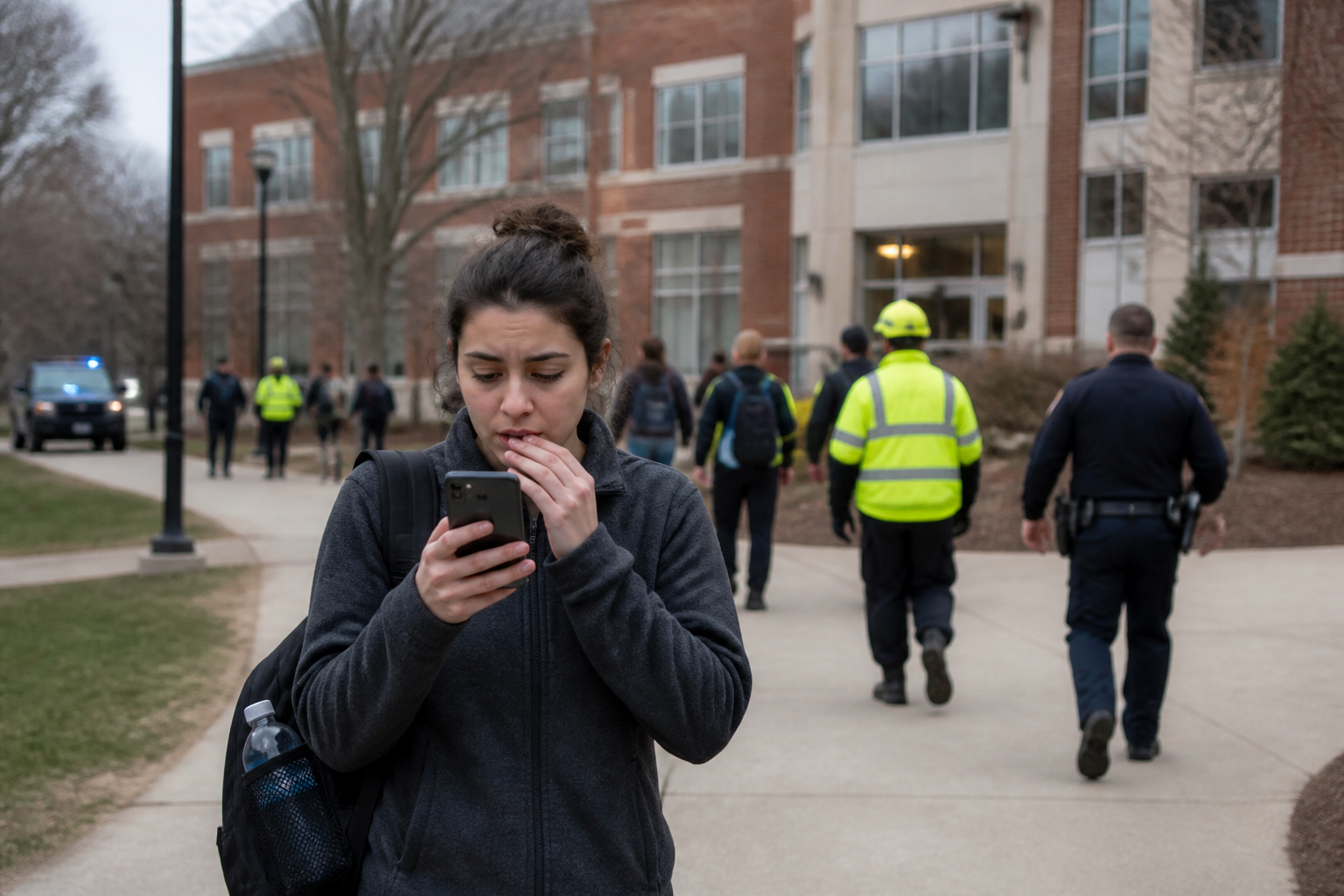
Higher education institutions rely on layered physical security, automated alert networks, and coordinated law enforcement protocols to mitigate threats during active violent incidents on campus. When gunfire erupts near residential facilities, these emergency mechanisms are designed to isolate danger zones, restrict movement, and notify students and staff within minutes.
Campus emergency response procedures typically integrate immediate perimeter controls with automated text, email, and siren alerts. Security personnel secure surrounding buildings, while law enforcement officers establish incident command centres to direct tactical responses, coordinate emergency medical care, and secure surrounding neighbourhoods.
The mechanics of these emergency systems came into focus following a violent incident at Virginia State University, where a shooting outside campus dormitories left five people wounded, according to reportage from NBC News. The incident occurred shortly before the start of the academic semester, highlighting the operational challenges security personnel face during periods of high campus foot traffic.
Automated alerts and physical containment
Emergency plans at major academic institutions are structured around rapid communication and spatial containment. Upon confirmation of an active security threat, campus public safety departments activate mass notification software to issue immediate lockdown directives across multiple digital channels.
Physical protocols require staff and students to remain indoors, lock structural access points, and clear open common areas. According to reports by CBS News, initial responses to campus shootings involve sweeping public spaces to clear bystanders and establishing perimeter barriers to prevent unauthorized entry while search operations take place.
Security operations must simultaneously address internal campus safety and coordinate with external municipal and state police agencies. According to reporting by Al Jazeera, incidents involving multiple suspects or fleeing perpetrators require regional law enforcement agencies to deploy tactical units and establish wide containment zones beyond the immediate institutional borders.
Medical response and operational logistics
Emergency protocols mandate the rapid creation of triage areas near the outer perimeter of a secured zone to treat casualties. Responders must balance swift medical intervention with ongoing threat assessment, ensuring that paramedics can access injured individuals while tactical teams secure the immediate vicinity.
Following the dormitory shooting, five victims were taken to medical facilities and placed in recovery, as reported by CBS News. Emergency medical units work alongside campus authorities to manage transport logistics and maintain clear access corridors for emergency vehicles during an active lockdown.
Resource allocation during campus security incidents also extends to support services for incoming and returning students. Institutional frameworks often incorporate immediate logistical adjustments, such as modifying orientation schedules, restricting access to specific residential halls, and deploying psychological counselling resources to assist the university community.
Investigative protocols and forward steps
Once an active scene is stabilized, institutional operations transition from emergency containment to investigative support and law enforcement processing. Detectives and forensic teams secure crime scenes, analyze physical evidence, and review campus surveillance feeds to trace suspect movements.
Police investigations following the Virginia State University incident led to the arrest of a suspect linked to the shooting, according to ABC News. However, multi-jurisdictional searches often continue when authorities suspect additional individuals were involved, as noted in reports by The Guardian and The Washington Post.
As law enforcement proceedings advance, university administrators evaluate the performance of security hardware, notification delays, and access control systems during the event. Future safety updates typically depend on these post-incident reviews to refine emergency response plans prior to the full resumption of academic activities.