How US Universities Deploy Campus Security Protocols During Active Threat Incidents
Higher education institutions rely on automated alerts, physical access controls, and law enforcement integration to manage campus security threats.
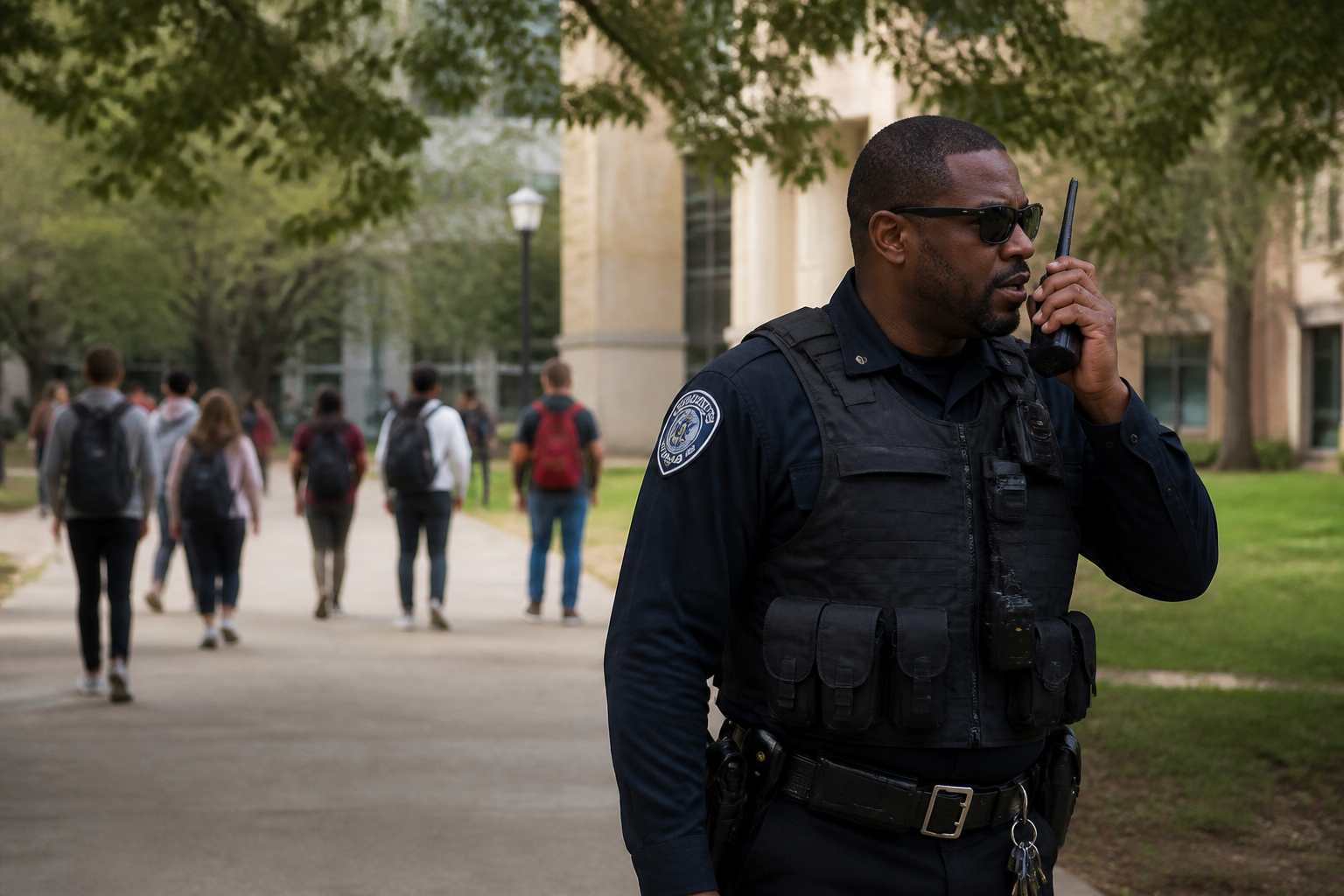
Higher education institutions across the United States rely on multi-layered security infrastructure, real-time emergency alert systems, and local law enforcement partnerships to navigate active security threats on campus. Emergency protocol frameworks at American universities are structured to isolate active threats quickly while providing immediate medical response, a setup tested whenever violent incidents spill onto university grounds.
Safety procedures facing higher education administrators involve balancing open academic settings with perimeter control measures. Most US universities operate dedicated police departments or security forces working alongside municipal agencies, supported by automated notification networks that broadcast lockdown instructions via text messages, digital signage, and public address systems.
These administrative structures faced immediate deployment following an active violence event in Virginia. Five people suffered injuries in a shooting incident involving multiple shooters at Virginia State University, according to reports by the Associated Press and CBS News. The event highlights the operational challenges campus authorities face when managing dynamic threats involving more than one armed individual.
Institutional Safety Frameworks and Emergency Alerts
Modern security protocols at US universities rely heavily on rapid notification capabilities mandated by federal safety regulations. Under the Jeanne Clery Disclosure of Campus Security Policy and Campus Crime Statistics Act, institutions receiving federal funding must maintain open crime logs and issue timely warnings when threats emerge.
When a campus alert triggers, automated systems dispatch messages instructing students and staff to seek shelter, lock doors, and await instructions from emergency responders. Security experts note that multi-shooter scenarios present complex tactical challenges for campus police, requiring rapid perimeter containment while simultaneously coordinating emergency medical triage for injured individuals.
Universities invest significant resources into emergency communications, physical access controls, and joint training exercises with regional law enforcement. Annual budget allocations for institutional public safety departments frequently total millions of dollars, with larger public universities budgeting upwards of $10 million (approx. KSh 1.29 billion) to $20 million (approx. KSh 2.58 billion) annually to maintain continuous surveillance, patrol personnel, and command centers.
Physical Security and Access Management Protocols
Beyond alert systems, higher education institutions implement physical security measures designed to limit unauthorized access during emergencies. These measures include electronic card-access locksets on dormitories and academic buildings, centralized lockdown capabilities controlled by public safety dispatchers, and extensive closed-circuit television networks.
Institutional responses typically follow standardized active shooter protocols developed by safety agencies. Analysis of campus safety practices indicates that physical barriers and rapid containment remain the primary tools for minimizing potential casualties while law enforcement clears facilities building by building.
However, campus security administrators face distinct operational constraints compared to corporate or secondary school environments. Because university grounds often encompass public thoroughfares and open green spaces, establishing complete physical perimeters presents technical and financial hurdles.
Tactical Challenges and Policy Considerations
When violent incidents involve multiple shooters, campus safety command structures must process conflicting information while managing immediate public safety responses. Tactical protocols require initial responding officers to engage active threats directly rather than wait for specialized teams, a doctrine established to reduce response times during critical incidents.
Federal law enforcement guidance emphasizes clear communication channels between campus police forces and municipal emergency services. Joint dispatch integration allows external first responders to access campus mapping data, facility blueprints, and camera feeds during an ongoing containment operation.
Following major safety breaches on university grounds, institutional boards typically commission independent security audits to evaluate the speed of emergency notifications and the effectiveness of building access controls. These assessments often drive subsequent capital investments in public safety infrastructure, including upgraded emergency call boxes, automated door locking systems, and expanded mental health support resources.
University administrators continue to evaluate security postures, seeking to refine threat assessment protocols and emergency response plans to safeguard student populations while maintaining functional academic environments.