A Strategic Shift: Why Scaling Down US-South Korea Drills Risks More Than Readiness
Plans to reduce the scale of joint military exercises between the United States and South Korea have raised concerns among defense analysts, who warn the move could impact alliance deterrence and regional security.
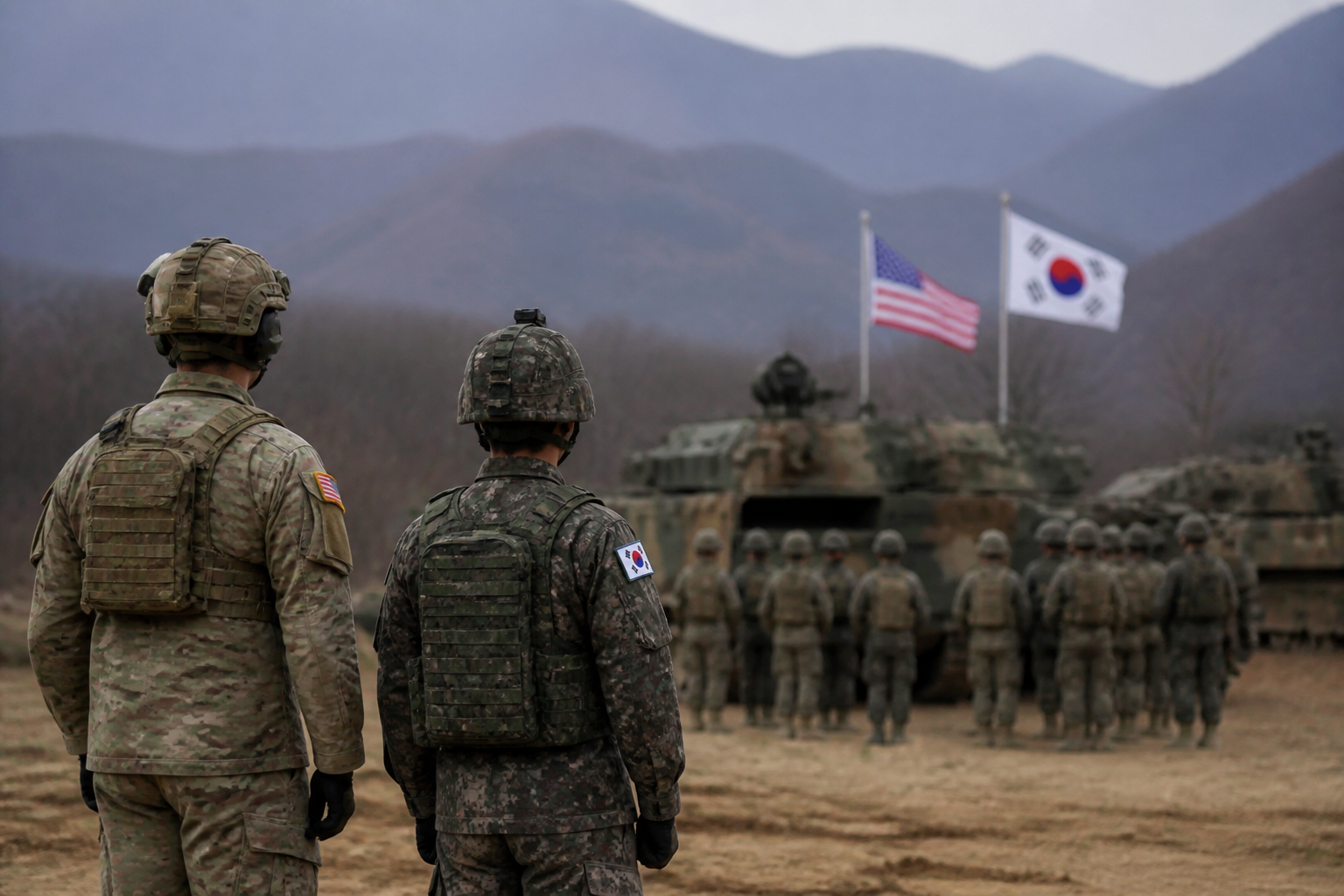
Uncertainty hangs over East Asia following reports that the United States is scaling down its joint military exercises with South Korea. Former US President Donald Trump has advocated for reducing these large-scale manoeuvres, raising questions amongst defense analysts about alliance readiness and regional stability.
According to reporting by CNBC, military experts warn that scaling back the combined drills carries implications that extend well beyond immediate combat preparedness. The decision affects deterrence capabilities against North Korea, command-and-control integration, and broader geopolitical alignments across the Indo-Pacific.
Washington and Seoul have historically relied on these regular joint exercises to ensure seamless operational coordination between their armed forces. The drills serve as a cornerstone of the 1953 Mutual Defense Treaty, designed to deter potential aggression from Pyongyang.
What Happened?
The proposal to reduce the scope of joint exercises aligns with previous presidential policy directives aimed at curtailing US foreign military expenditures. During his term in office, Trump frequently questioned the financial cost of maintaining large troop deployments overseas and described the combined military drills as expensive and provocative.
Supporters of the adjustment argue that reducing high-profile exercises can create diplomatic leverage for denuclearisation talks with North Korea. However, critics point out that past reductions did not yield permanent diplomatic concessions or curb Pyongyang's missile development programme.
Defense officials in Washington and Seoul have continuously adjusted exercise formats over recent years, at times substituting computer-simulated command post drills for large-scale field maneuvers to maintain operational readiness while managing political sensitivities.
Why It Matters
Military analysts emphasize that live-fire and field-training operations provide practical experience that simulations cannot fully replicate. Scaling down these activities risks eroding inter-operability between American and South Korean units, particularly regarding combined command structures.
Beyond technical readiness, the alliance holds economic and security significance for global trade routes and technology supply chains. Stability on the Korean Peninsula impacts international markets, global shipping corridors, and defense partnerships across Asia and Africa.
Furthermore, any perceived weakening of US security guarantees in Asia sparks broader debates regarding alliance commitments elsewhere, including trade and security frameworks relied upon by international partners.
What Comes Next?
The prospective reductions put pressure on South Korea to accelerate its defense modernization efforts. Seoul continues to invest heavily in its domestic defense industry, seeking greater autonomy in its intelligence, surveillance, and reconnaissance capabilities.
Policy advisors expect diplomatic discussions to focus on burden-sharing arrangements and alternative training frameworks. Bilateral negotiations between US and South Korean military leadership will aim to balance political objectives with the technical requirements of territorial defense.
As geopolitical tensions remain active across the region, decision-makers in both capitals face the task of ensuring that operational deterrence remains credible while navigating shifting political priorities.