Bridging the Adaptation Gap: What Smallholder Climate Schemes Require to Scale
Local agricultural initiatives offer immediate relief to smallholders facing climate volatility, but scaling these programs requires systemic financing and institutional partnerships.
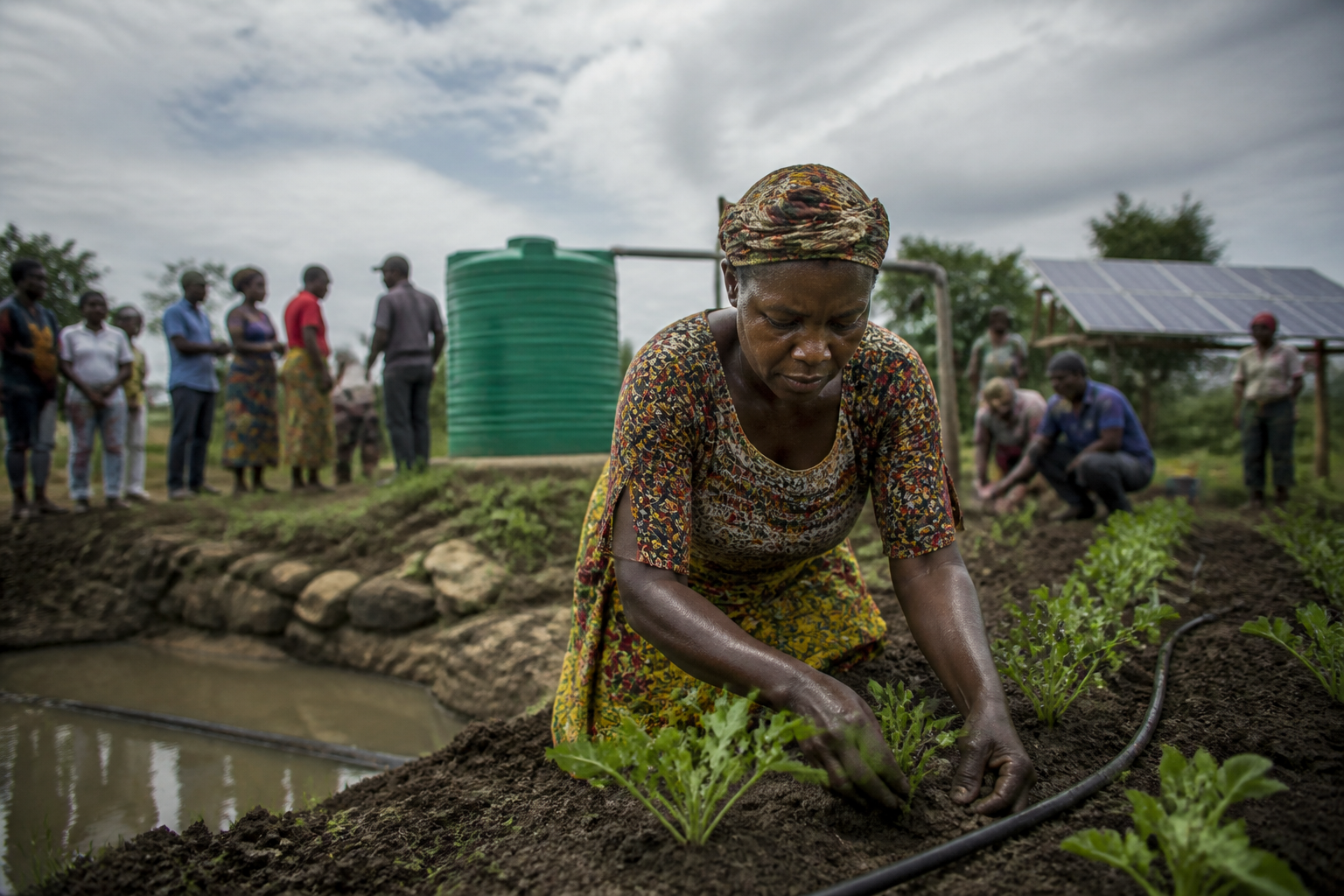
Smallholder farmers across developing agricultural economies face an escalating struggle against unpredictable weather patterns, prolonged droughts, and erratic rainfall. While localized agricultural initiatives frequently step in to offer immediate relief, regional development experts stress that scaling these climate-adaptation schemes into sustainable, long-term safety nets remains exceptionally difficult without systemic financial backing and structured multi-stakeholder partnerships.
Without aggregated capital and institutional cooperation, grassroots support projects risk remaining isolated, temporary fixes rather than enduring economic shields for agrarian communities, according to coverage by The Standard.
The core challenge lies in the sheer fragmention of smallholder farming. Unlike large commercial enterprises, smallholders operate on thin margins and lack access to affordable credit or sophisticated crop insurance. When extreme weather strikes, small-scale producers are often forced to absorb the financial shock directly, eroding their working capital and deepening rural poverty.
The financial mechanics of adaptation
Climate-adaptation programs aimed at empowering local growers typically focus on diversifying revenue sources, improving soil health, and introducing drought-tolerant crop varieties. However, expanding these initiatives requires significant upfront investment in training, modern irrigation infrastructure, and reliable supply-chain connections.
When local interventions operate in isolation, funding tends to rely on short-term donor grants or limited community contributions. Financial analysts point out that grant-funded models rarely achieve long-term viability because capital inflows fluctuate, preventing organizers from making multi-year investments in infrastructure or bulk purchasing.
To move beyond baseline survival, local agricultural schemes require institutional frameworks that bridge smallholders with commercial lenders, impact investors, and government extension services.
The multi-stakeholder model
Building resilient rural economies requires aligning the incentives of public institutions, private agribusinesses, and local communities. Public sector backing provides necessary regulatory support and public infrastructure, while private off-takers guarantee market access for resilient crops.
When financial institutions participate by offering micro-loans backed by partial credit guarantees, smallholders can afford high-quality inputs and modern farming tools. Without this multi-pronged backing, individual empowerment drives struggle to survive initial pilot phases or extend their reach beyond a few hundred households.
Furthermore, integrating technology—such as mobile-based weather updates and digital payment platforms—requires institutional cooperation to deploy at scale, ensuring that rural farmers obtain timely, actionable information.
What happens next
As climate volatility increases pressure on regional food supplies, the focus is shifting toward whether policymakers and development partners can institutionalize these local initiatives.
Observers will be watching whether upcoming agricultural policy frameworks integrate grassroots adaptation drives into national budget allocations and commercial banking sector mandates, establishing the structural support required to safeguard smallholder livelihoods over the long term.