Systemic Overhaul: How Kenya's New Health Financing Structure Operates
*Kenya is replacing the old National Hospital Insurance Fund with the Social Health Authority, moving from flat monthly premiums to an income-based model across three funds. Here is how the structural transition works and what it means for universal healthcare.*

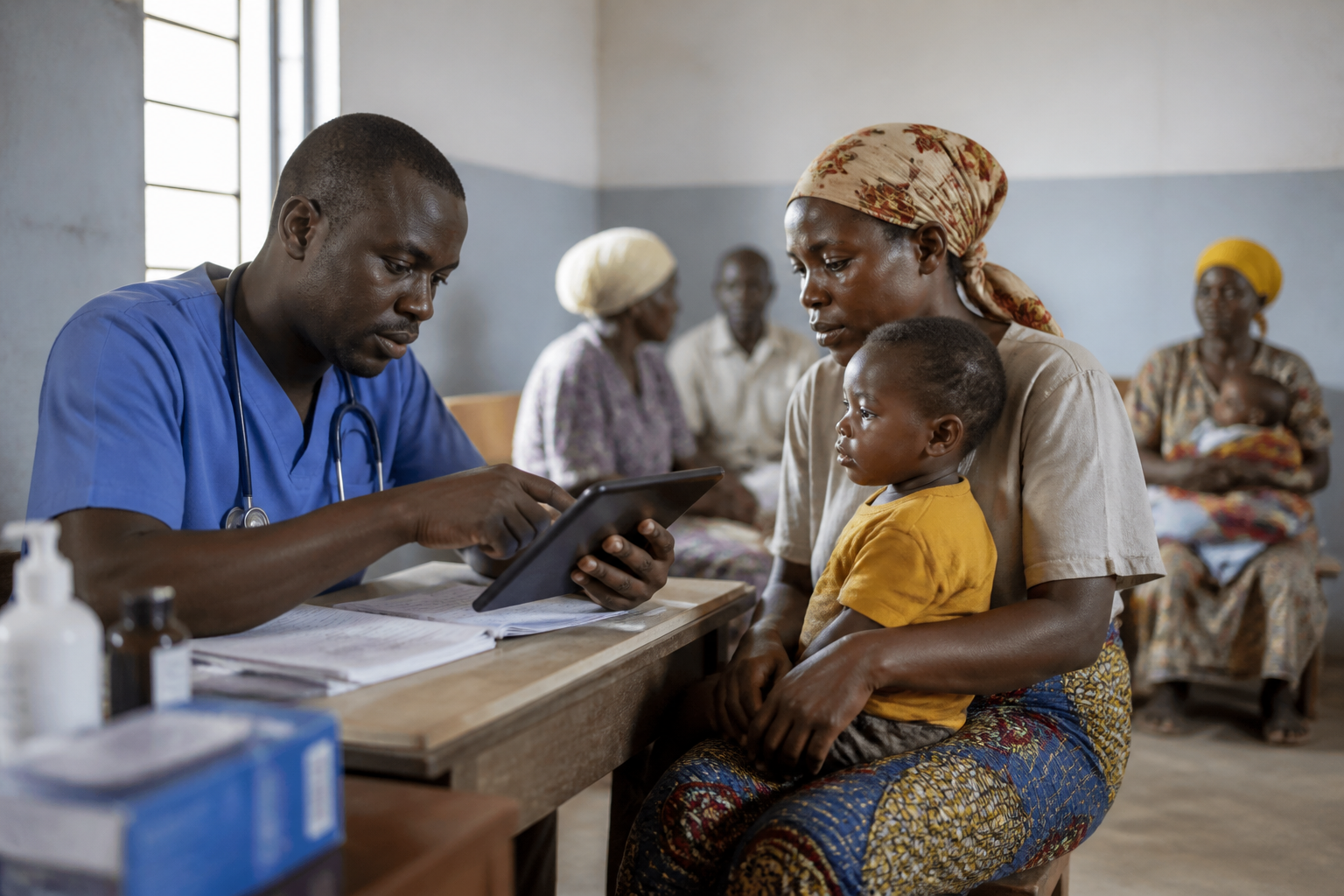
AI-generated illustration — for illustrative purposes only. M360 News Team
Kenya’s health sector is undergoing its most significant structural overhaul in decades as the government phases out the National Hospital Insurance Fund (NHIF) in favour of the Social Health Authority (SHA).
The transition shifts the country’s public healthcare financing from a voluntary, fixed-rate subscription model to a mandatory income-based digital framework designed to achieve Universal Health Coverage (UHC).
According to The Star, the government maintains a firm stance on mass enrolment, with administrative leadership confirming that public mobilization will continue until every citizen is registered under the new medical scheme.
How Does SHA Work?
The structural architecture of SHA departs fundamentally from the former NHIF system by splitting public health financing into three distinct, specialized funds.
The Primary Healthcare Fund caters to outpatient and preventive services at Level 1 to Level 3 health facilities, funded entirely by the national government without direct member contributions.
The Social Health Insurance Fund (SHIF) serves as the core operational layer, requiring a statutory contribution calculated at 2.75 percent of gross household income, replacing the previous flat-rate NHIF tier.
For specialized and complex medical treatment beyond standard coverage, the Emergency, Chronic, and Critical Illness Fund acts as a tertiary safety net to prevent catastrophic out-of-pocket medical expenditure.
What Drives the Transition?
The migration to the new framework is designed to eliminate systemic inefficiencies, fraud, and financial deficits that previously compromised the financial viability of the NHIF.
Under the previous framework, voluntary self-contributions from informal sector workers created an unsustainable anti-selection problem, where individuals enrolled primarily when facing immediate medical claims.
By enforcing universal digital registration, the government aims to pool financial risk across the entire population, widening the contribution base to stabilize public health funding.
The World Health Organization has expressed support for Kenya’s institutional reforms, affirming that structured risk-pooling is a critical component for low- and middle-income countries working toward universal care delivery.
What Are the Operational Challenges?
Despite the structural design, the transition faces public scrutiny regarding digital procurement, infrastructure readiness, and contribution collection mechanisms for non-salaried workers.
Debates surrounding the digital infrastructure powering SHA have drawn national attention, though executive leadership has dismissed allegations regarding inflated technology contracts.
Enforcing contributions within the informal sector remains a key operational hurdle, requiring precise means-testing algorithms to evaluate household incomes fairly.
Furthermore, public healthcare providers require seamless digitised clearing systems to prevent billing disruptions and delays in facility reimbursements during the migration period.
What Comes Next?
The administration is accelerating nationwide registration drives through local administrative channels to onboard all households into the digital repository.
As the implementation progresses, county-level health innovations and facility upgrades will be monitored to determine whether primary care centers can absorb the expected increase in patient footfall.
The long-term viability of the financing mechanism will depend on the efficiency of premium collections, the transparency of the IT management systems, and prompt disbursements to healthcare providers across the country.