Tracking Brazil's presidential race: What the polls show and what remains uncertain
As Luiz Inácio Lula da Silva launches his campaign for a fourth term, polling data provides a partial picture of the electorate, leaving crucial campaign dynamics and turnout variables unmeasured.
Attempts to accurately map the trajectory of the Brazilian presidential race face a mix of clear polling trends and significant analytical blind spots as incumbent President Luiz Inácio Lula da Silva begins his bid for a fourth term in office.
Polling data aggregated by The Economist shows a competitive electoral landscape, but current survey methodologies leave critical variables unmeasured ahead of the vote. At the same time, historical campaign dynamics and physical field presence—such as Lula’s return to his early political grounds—highlight factors that standard quantitative polling cannot easily capture.
Understanding the state of the contest requires separating confirmed statistical indicators from the underlying information gaps that obscure the final outcome.
What the polling data reveals
Aggregated survey metrics from The Economist track candidate preferences across the Brazilian electorate, establishing a baseline of voter alignment and public sentiment toward the incumbent administration.
These tracking models aggregate primary polling data across multiple survey firms to smooth out individual house biases and sample fluctuations. The quantitative data provides a snapshot of head-to-head match-ups and approval ratings, demonstrating how the current administration’s political standing compares against potential opposition contenders in early projections.
However, while tracking models map voter preferences at specific points in time, polling aggregators continuously adjust as new survey samples enter the model.
Information gaps and structural uncertainties
Despite the baseline metrics offered by poll trackers, several critical variables remain unmeasured by standard survey data.
First, early polling often struggles to capture the precise turnout dynamics across Brazil's vast and economically diverse electorate. Mandatory voting laws in Brazil alter participation patterns compared to voluntary systems, yet differential turnout among key demographic cohorts remains a primary source of uncertainty in predictive modeling.
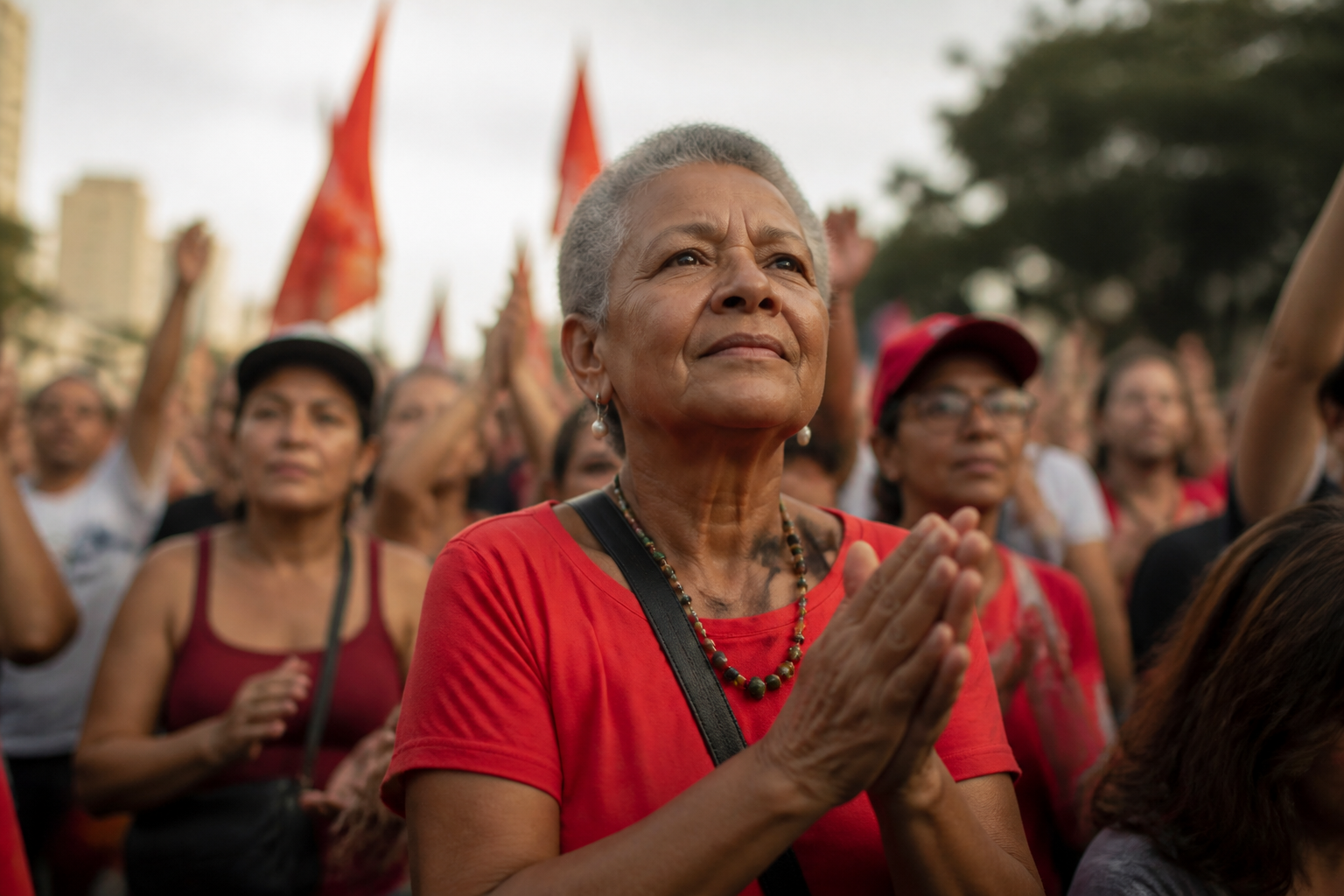
Second, the political footprint of campaign events in foundational labor hubs introduces qualitative variables that quantitative trackers miss. According to The Guardian, Lula recently returned to the site of his political origins in the industrial ABC region of São Paulo to launch his fourth-term campaign, leaning heavily on personal political history and working-class mobilization.
The report by The Guardian noted that supporters recalled Lula's early political career, describing how "he had magnetism" when leading metalworkers' strikes that initially propelled him onto the national stage. Quantitative polling struggles to measure how effectively such appeals to institutional memory and historical identity translate into enthusiasm and voter turnout among younger generations who did not experience his early trade union leadership.
Third, opposition field strength and coalition alignment remain fluid during the early stages of campaign tracking. Polling models must frequently adapt to shifting candidate rosters and potential second-round endorsement strategies, leaving open questions about how undecided voters will consolidate when forced to choose between the top two candidates in a run-off.
What happens next
As the campaign progresses, polling organizations will update their tracking algorithms to incorporate higher-frequency field surveys and regional breakdowns. Analysts will monitor whether Lula’s grassroots mobilization strategy in core industrial sectors can stabilize his national polling averages or if opposition coalitions can exploit lingering economic uncertainties to shift undecided voters before official ballots are cast.