A Shadow Over Security: State Officials Accused of Funding Political Chaos
A formal complaint submitted to the Inspector General of Police accuses senior Interior ministry leadership of bankrolling political disruption ahead of a planned opposition rally in Narok County.
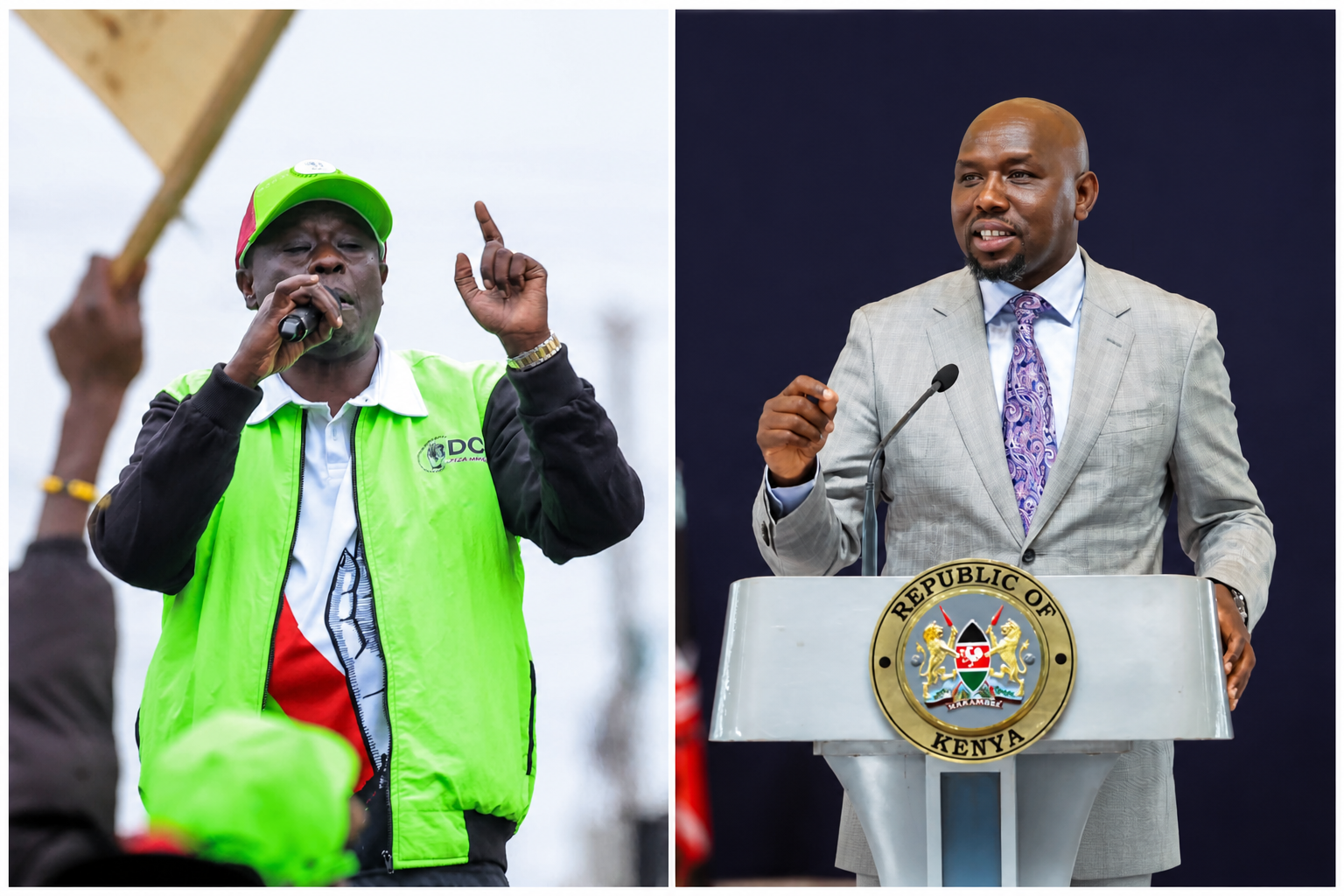
Rigathe Gachagua vs Kipchumba Murkomen · Rigathe Gachagua and Kipchumba Murkomen
Demdemocracy For the Citizens Party (DCP) leader Rigathi Gachagua has lodged a formal complaint with Inspector General of Police Douglas Kanja Kirocho, alleging a state-backed plot to orchestrate violence at a political gathering in Narok County. The petition directly challenges public security commitments made by Interior Cabinet Secretary Kipchumba Murkomen and Principal Secretary Raymond Omollo, contrasting official promises of political neutrality with allegations of state-funded interference.
According to a formal letter dispatched to the National Police Service on 20th August 2026, the opposition party alleges that top Interior ministry officials are bankrolling local chaos. The complaint follows a sequence of violent disruptions at political gatherings across the country, raising fresh questions about the enforcement of constitutional rights to free movement and assembly.
What Are the Allegations?
In the letter addressed to Police Chief Douglas Kanja, the DCP party leader warned of a coordinated plot targeting a scheduled visit to Emurua Dikirr Constituency on 21st August 2026. The visit was organised to join party candidate Vincent Rotich for a thanksgiving event following the 14th May 2026 by-election.
The opposition petition alleges that current Emurua Dikirr Member of Parliament David Kipsang Keter issued threats to prevent the DCP delegation from entering the constituency. The letter further alleges that Interior CS Kipchumba Murkomen and PS Raymond Omollo provided financial backing to mobilise plain-clothes police officers and armed youth to disrupt the event.
The party claims the planned disruption was engineered to exceed the scale of recent political clashes in Homa Bay, describing the weekend chaos as a failure of command within the National Police Service. The letter notes that despite recording previous complaints regarding 24 separate attacks against party members, law enforcement authorities have taken no decisive action.
Why Does It Matter?
The allegations place the leadership of the Ministry of Interior in direct conflict with their statutory obligations to preserve public safety and guarantee non-partisan policing. While administrative heads continually reassure the public of stability, formal complaints submitted to the Inspector General highlight a growing divide between executive declarations and political realities on the ground.
The situation underscores persistent security vulnerabilities surrounding political gatherings in Kenya. By explicitly accusing senior executive officials of financing plain-clothes officers to instigate violence, the petition challenges the neutrality of state security infrastructure ahead of upcoming regional engagements.
Political analysts note that unaddressed claims of state-sponsored intimidation risk eroding public trust in police operations. When administrative resources are alleged to support localized political disruption, law enforcement agencies face heightened pressure to demonstrate independent command structures.
What Happens Next?
The Inspector General of Police faces immediate calls to respond to the security concerns raised ahead of the Emurua Dikirr event. Under national legal frameworks, the police service is constitutionally mandated to protect human life, property, and freedom of movement for all citizens regardless of political affiliation.
Neither Interior CS Kipchumba Murkomen nor PS Raymond Omollo have publicly issued a response to the specific financial allegations contained in the DCP petition. Police headquarters has similarly not confirmed whether additional security deployments will be assigned to secure the Narok County venue.
Monitoring groups and civic organisations are tracking developments closely as political parties prepare for subsequent field events. The response of law enforcement to the formal notice will serve as a critical test of official commitments to public safety and democratic freedoms.