A New Frontier: How Robot Racing Is Transforming Tech Competition
Competitive robot racing is rapidly moving from engineering labs to mainstream tech rivalries, offering a high-speed proving ground for advanced artificial intelligence and autonomous hardware.
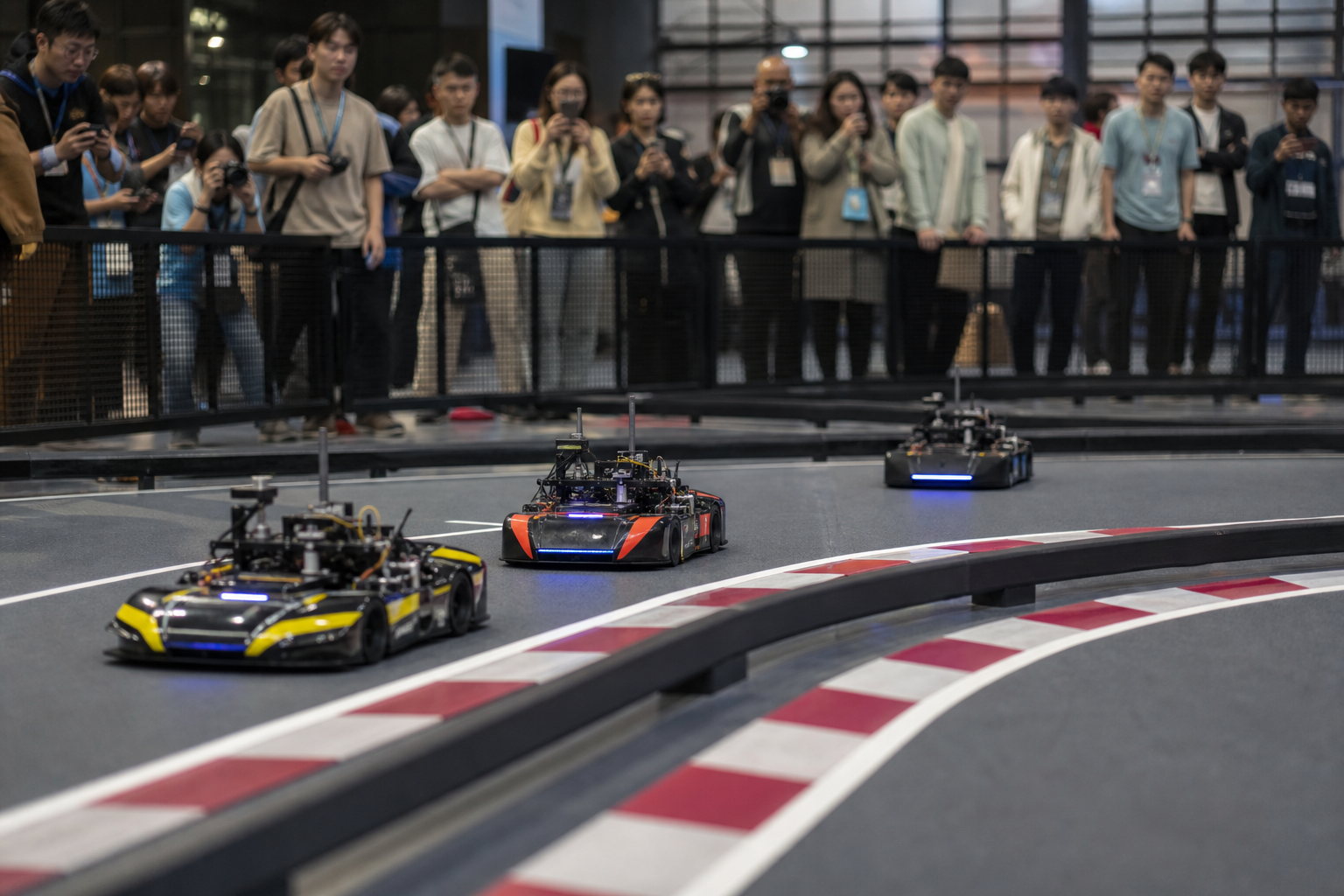
The global technology sector is entering a new competitive arena as organized robot racing emerges as a key testing ground for autonomous hardware and artificial intelligence software. Recent reporting by DW highlights how competitive robot racing has shifted from a niche engineering hobby into a major area of tech industry competition. Engineering teams and technology companies are increasingly using fast-paced competitive environments to push the boundaries of real-time machine processing, sensor integration, and mechanical agility. The rise of these high-speed competitions comes as global tech firms invest heavily in robotics, computer vision, and machine learning, seeking to accelerate the commercial deployment of autonomous systems in real-world environments. ## What Is Happening? Robot races evaluate autonomous machines on speed, spatial navigation, obstacle avoidance, and decision-making accuracy under tight time constraints. Unlike traditional automated systems programmed for static factory environments, racing platforms require software algorithms to process complex environmental data in milliseconds. Developers use these races to stress-test autonomous navigation software, lidar units, and onboard machine-learning models. Competing under strict parameters forces engineers to resolve critical latency issues, helping to ensure that algorithms can make immediate split-second corrections when hardware operates at peak capacity. Tech industry analysts observe that high-stakes competitive racing acts as a proving ground for technologies that eventually transition into commercial industrial automation, logistics, and driverless mobility. ## Why Does It Matter? The technology developed on competitive tracks directly impacts broader commercial applications across several sectors, including supply-chain logistics, agriculture, and emergency response services. Autonomous systems designed to handle high-velocity racing environments yield vital data on hardware durability, power management, and real-time processing efficiency. These advancements reduce operational failures when deployed in real-world scenarios, such as automated warehouse management, drone parcel delivery, and search-and-rescue operations. Furthermore, racing competitions drive rapid innovation cycles in software development. Algorithms tested against rival machines must continuously adapt to unpredictable physical variables, accelerating the development of robust, adaptable artificial intelligence systems. ## What Comes Next? As corporate investment and public interest in robotics continue to grow, competitive robot racing is set to become more structured, attracting larger engineering budgets and specialized sponsorship deals from major tech enterprises. Industry experts anticipate that future competitions will increasingly feature standardized benchmark challenges, allowing developers to compare real-time AI processing capabilities across different hardware platforms directly. The performance data gathered from these high-speed trials will shape the next generation of autonomous mobility, driving innovation from racing circuits into everyday commercial technologies.