A Sector Under Scrutiny: How Rwanda Regulates Its Growing Alcohol Industry
Rwanda is stepping up regulatory oversight of its domestic beverage sector, enforcement operations highlight the divide between formal industrial production and unregulated cottage processors.
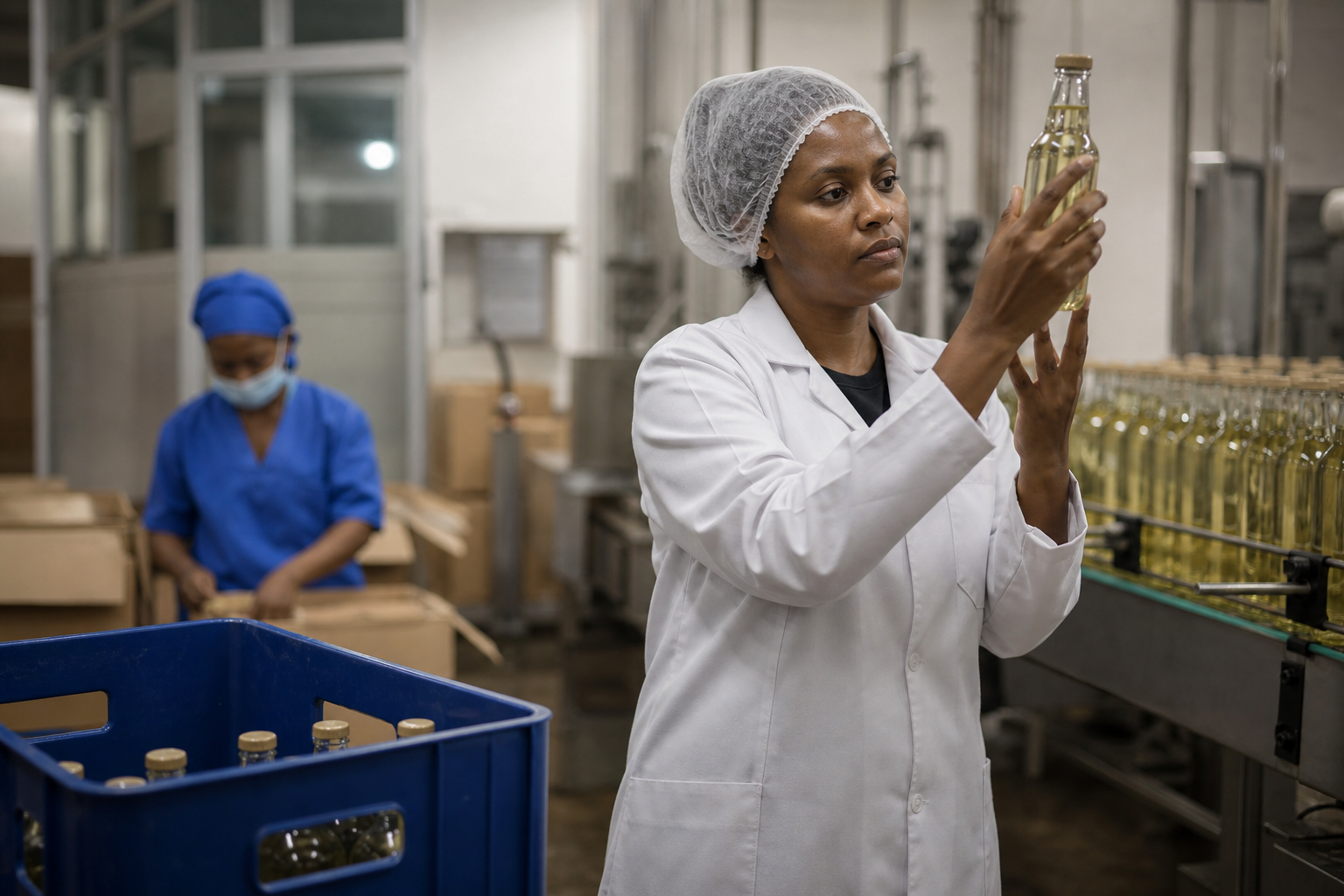
The structure of Rwanda’s beverage industry rests on a strict divide between licensed industrial production and decentralised, small-scale processors. Across East Africa, formal commercial beverage manufacturing generates millions of dollars in tax revenue and operating income, but unregulated production continues to account for a significant portion of total consumption. Regulatory agencies are moving to enforce uniform safety benchmarks to protect consumers and close tax compliance gaps.
In Rwanda, the regulatory framework governing food and beverage safety sits primarily under the jurisdiction of national standardisation bodies and health authorities. These institutions set strict parameters for ethanol concentration, chemical purity, labeling, and facility hygiene. While large commercial breweries operating within the region maintain standardized, automated distillation and brewing lines, informal cottage producers often rely on non-standard fermentation techniques that present operational and compliance challenges.
Unregulated beverage production frequently introduces significant consumer risks, most notably through unmeasured secondary fermentation or contamination with industrial chemicals like methanol. To mitigate these market distortions, administrative authorities across the region routinely implement targeted enforcement exercises to clear non-compliant products from public distribution networks.
How Standards Are Enforced?
The Rwandan government enforces quality benchmarks through market inspections, laboratory sampling, and factory audits. Under local administrative frameworks, processors must obtain official certification proving that their products conform to physical and chemical safety criteria before entering public retail channels.
During public engagements, senior officials have highlighted the economic and health rationale behind sweeping administrative crackdowns on non-compliant manufacturers. Rwandan President Paul Kagame recently addressed national operations aimed at curbing substandard alcohol, emphasizing that industrial operations must adhere to defined regulatory standards to operate legally. Reports from The EastAfrican confirm that government policy remains focused on removing unverified formulations from the local supply chain.
Compliance campaigns typically focus on two distinct market segments. The first involves unregistered operations producing high-proof traditional spirits without formal quality testing. The second involves licensed mid-tier processors that fail to maintain required hygiene metrics or bypass mandatory taxation mechanisms.
What Separates Formal and Informal Sectors?
The economic boundary between Rwanda’s formal and informal beverage sectors is defined by capital investment, taxation, and analytical oversight. Commercial manufacturers invest heavily in stainless-steel processing hardware, automated bottling lines, and internal laboratory infrastructure to satisfy both domestic standards and export criteria across the East African Community.
In contrast, informal and artisanal producers operate with minimal overhead, relying on traditional fermentation ingredients such as banana, sorghum, or honey. Because these operations rarely utilize precision temperature control or standardized testing equipment, product potency and safety can vary dramatically between batches.
M360 News · At a glance
Industry Feature
- Quality Verification
- Distillation Hardware
- Tax Compliance
- Regulatory Status
Formal Industrial Sector
- Laboratory-tested per batch
- Food-grade stainless steel
- Registered excise & VAT [system](/news/a-unified-system-somalia-launches-first-national-health-facility-registry)
- Standardised & certified
Informal & Cottage Sector
- Visual/untested batching
- Artisanal / non-standard vessels
- Unregistered cash transactions
- Subject to regulatory removal
Beyond consumer health considerations, the formalisation of the beverage industry is a central fiscal priority. Substandard and illicit commercial networks operate outside the tax net, undercutting fully compliant manufacturers that contribute regular excise duties and value-added tax to national treasuries.
What Comes Next?
Administrative bodies in Kigali are expected to maintain stringent market surveillance while simplifying compliance pathways for small-scale enterprises seeking formal certification. By tightening border checks on raw ingredients and increasing unannounced factory audits, regulatory authorities aim to bring traditional processors into alignment with regional trade standards.
For investors and regional manufacturers, strict regulatory enforcement establishes a more predictable operating environment. As standardisation measures gain momentum, market consolidation is likely to continue, favoring industrial processors capable of meeting modern manufacturing requirements.