Rules of the Pavement: Navigating Nairobi’s Complex Street Trade Regulations
Managing trade within Nairobi’s commercial core requires balancing public order policies with economic reality. Here is how the legal and regulatory framework operates when enforcement policies, municipal bylaws, and national import taxes collide.
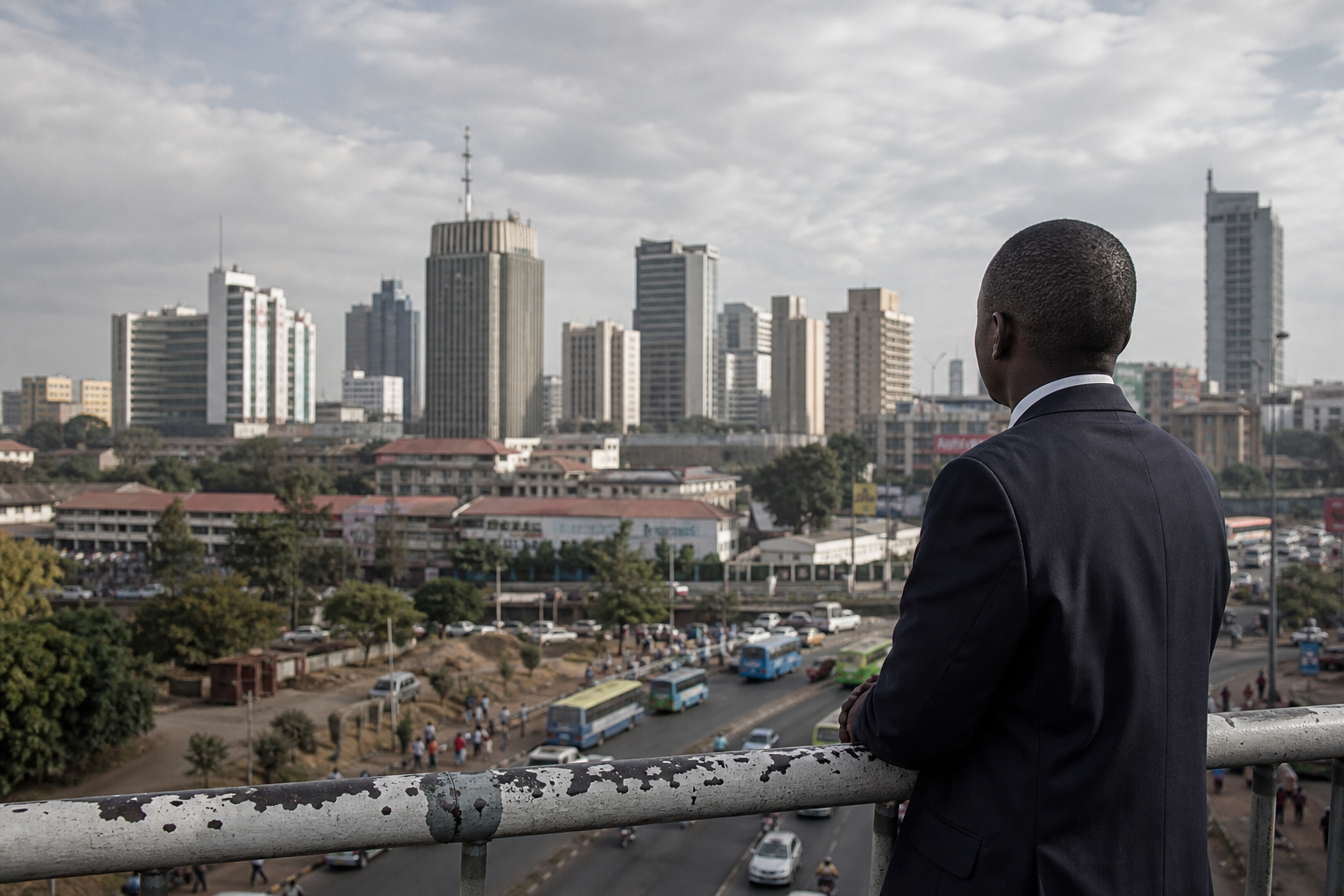
The administrative and legal framework governing informal trade within Nairobi’s central business district (CBD) rests on a delicate balance between public order policies and economic reality. Municipal authorities face continuous challenges in managing spatial allocation, enforcement measures, and tax revenues across designated commercial zones.
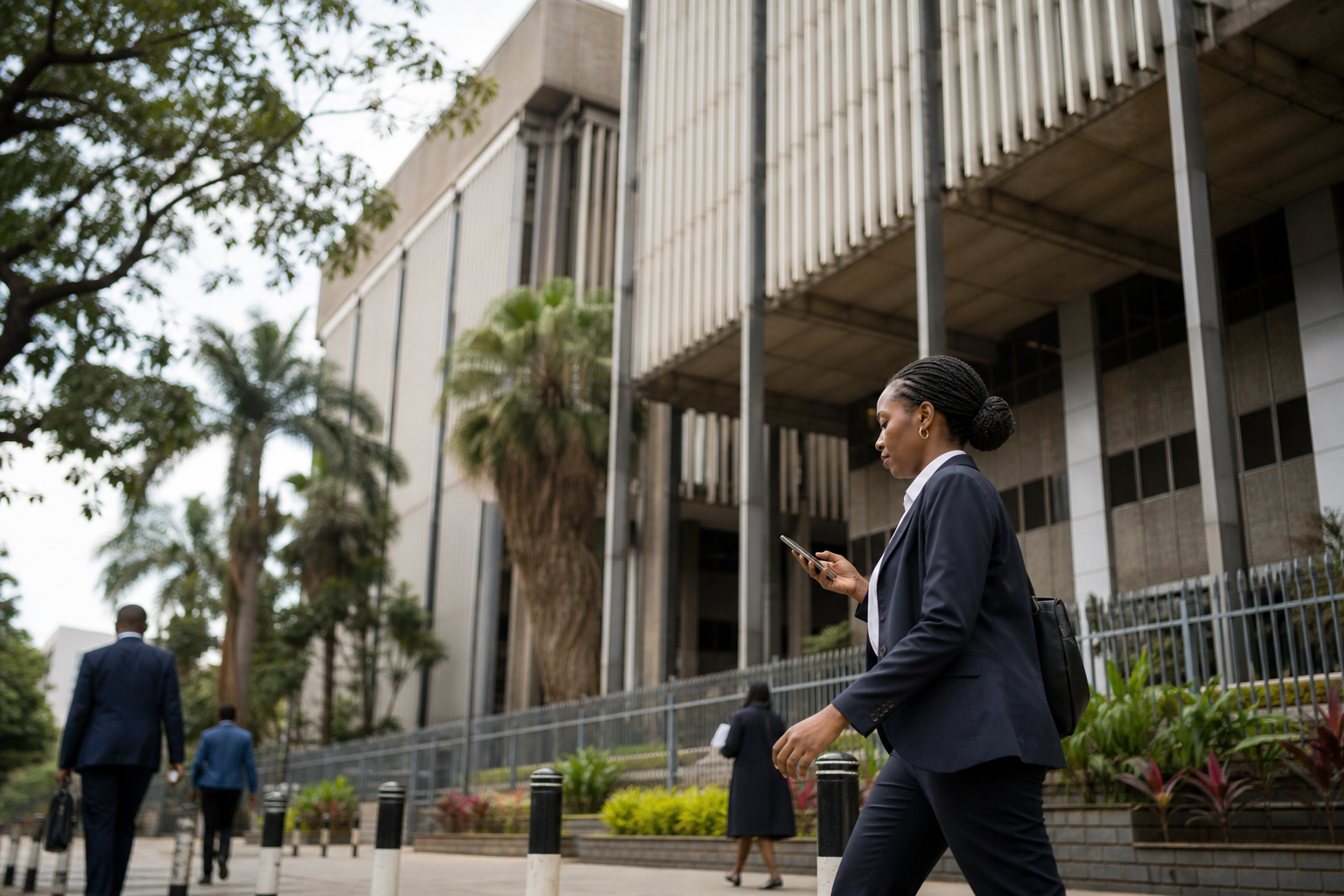
Urban planners and municipal authorities operate under county-level bylaws designed to regulate public walkways, maintain transport lanes, and prevent commercial congestion. However, the high density of foot traffic in the CBD makes the area an essential marketplace for small traders, setting up ongoing structural friction between formal business establishments, municipal inspectors, and informal vendors.
Managing these commercial spaces requires a combination of zoning permits, designated operational hours, and designated trade corridors. When policy shifts occur regarding taxation, licensing fees, or import duties, the spatial equilibrium within the CBD comes under immediate pressure, testing the capacity of existing municipal mechanisms to resolve trade disputes peacefully.
How Do Municipal Bylaws Govern Street Trade?
The regulatory framework for Nairobi's urban commerce relies primarily on the Nairobi City County Public Nuisance Bylaws and specialized spatial planning regulations. These legal instruments empower county enforcement officers to restrict unauthorized commercial activity on public pavements, road reserves, and building frontages.
Vendors seeking to operate legally within the CBD must obtain specific licenses and adhere to designated spatial allocations. Municipal policy attempts to balance these requirements by establishing designated open-air markets outside the central core, though the demand for trading space consistently outpaces the capacity of officially recognized trading sites.
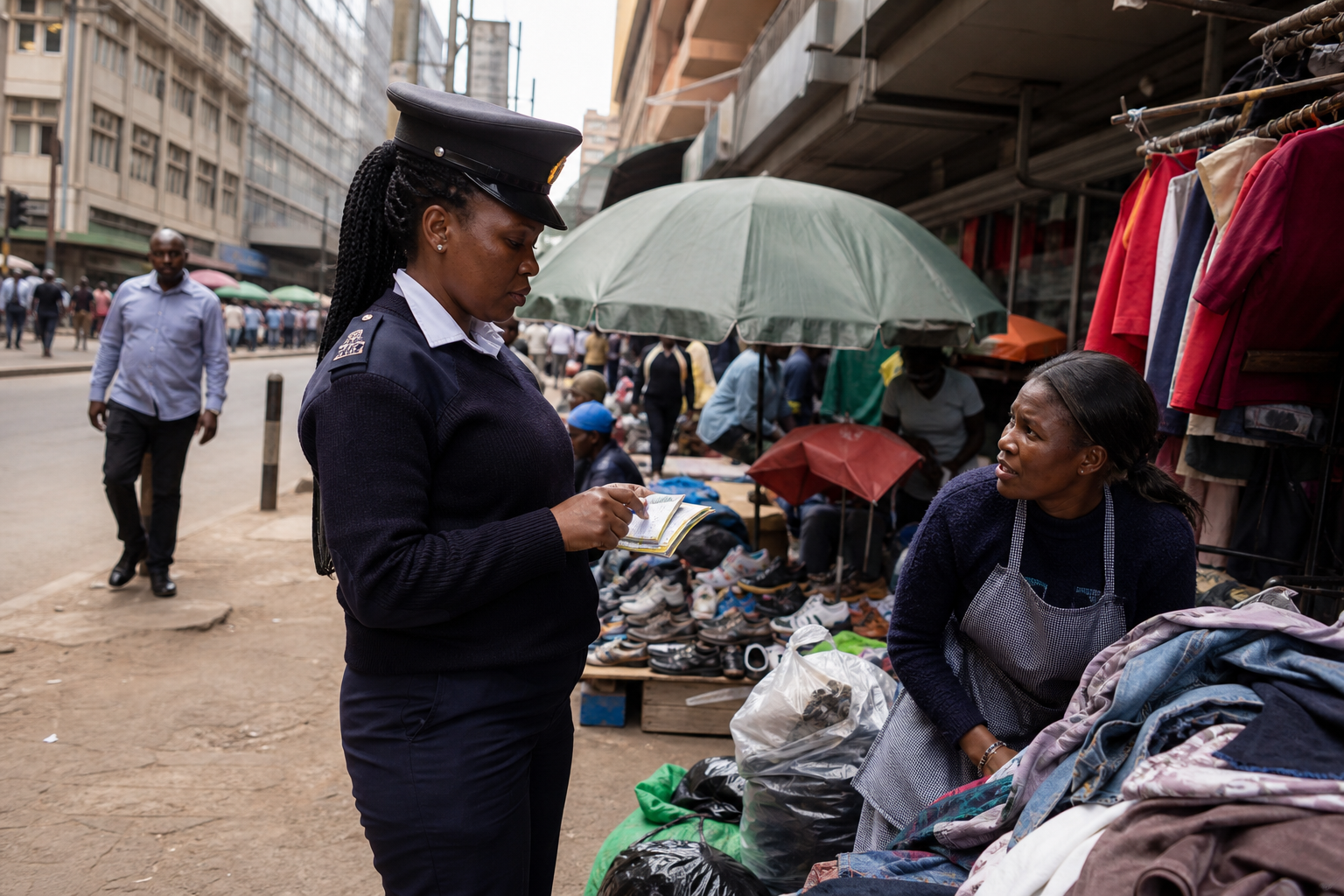
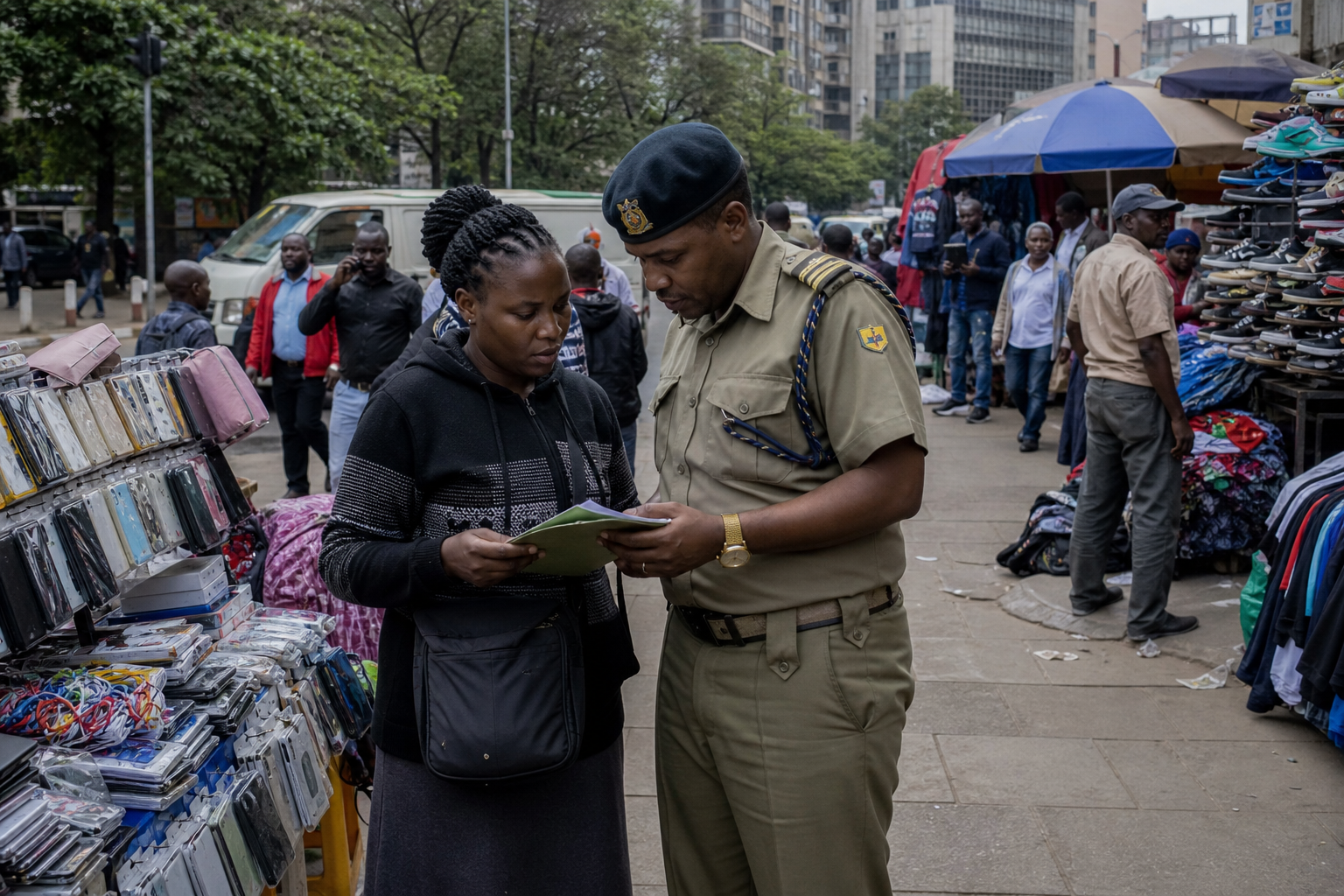
Enforcement mechanisms rely on physical patrols and routine compliance checks. When municipal authorities adjust trade boundaries or enforce strict non-hawking zones, enforcement actions often lead to direct confrontations between street vendors and local law enforcement officers.
What Triggers Spatial and Economic Friction?
The tension between urban regulators and informal vendors stems from broader macroeconomic policies, including national tax frameworks and import duty structures. Adjustments to import tariffs or local market levies directly alter the operating margins of small-scale traders who depend on low-cost goods for daily turnover.
According to reporting by nation.africa, police recently fired tear gas at small traders protesting within the Nairobi CBD. The protest highlights the operational volatility in the capital's commercial core when national trade policies intersect with local street commerce.
A parallel report by reuters.com noted that police used tear gas to disperse traders demonstrating against an import duty hike. These events demonstrate how shifts in national fiscal policy rapidly transform into physical disputes over the right to occupy commercial public space.
Who Regulates Public Order During Trade Disputes?
When municipal enforcement moves beyond standard licensing checks into large-scale public demonstrations, jurisdiction shifts from county inspectorates to national security institutions. The National Police Service maintains the primary mandate for public order management across the capital's streets.
Under Kenyan law, police interventions during civil disruptions are governed by public order frameworks designed to secure property and ensure free movement within urban transit corridors. However, the frequent deployment of crowd-control measures, such as tear gas, presents operational risks to adjacent formal businesses and pedestrians within the CBD's narrow streets.
Legal experts note that resolving these recurring enforcement crises requires structured mediation mechanisms between small-scale trader associations, county government officials, and national economic policy planners.
What Happens Next?
County administrators and trade representatives face pressure to formalize long-term spatial agreements for street trade within Nairobi. Key developments to monitor include proposed revisions to county hawking management bills, potential adjustments to small-scale import tariffs, and the expansion of designated off-street trading hubs near the CBD boundary.
Without clear, long-term spatial planning and transparent fiscal consultative mechanisms, the commercial core of the capital will remain vulnerable to sudden disruptions whenever national tax adjustments intersect with local enforcement policies.