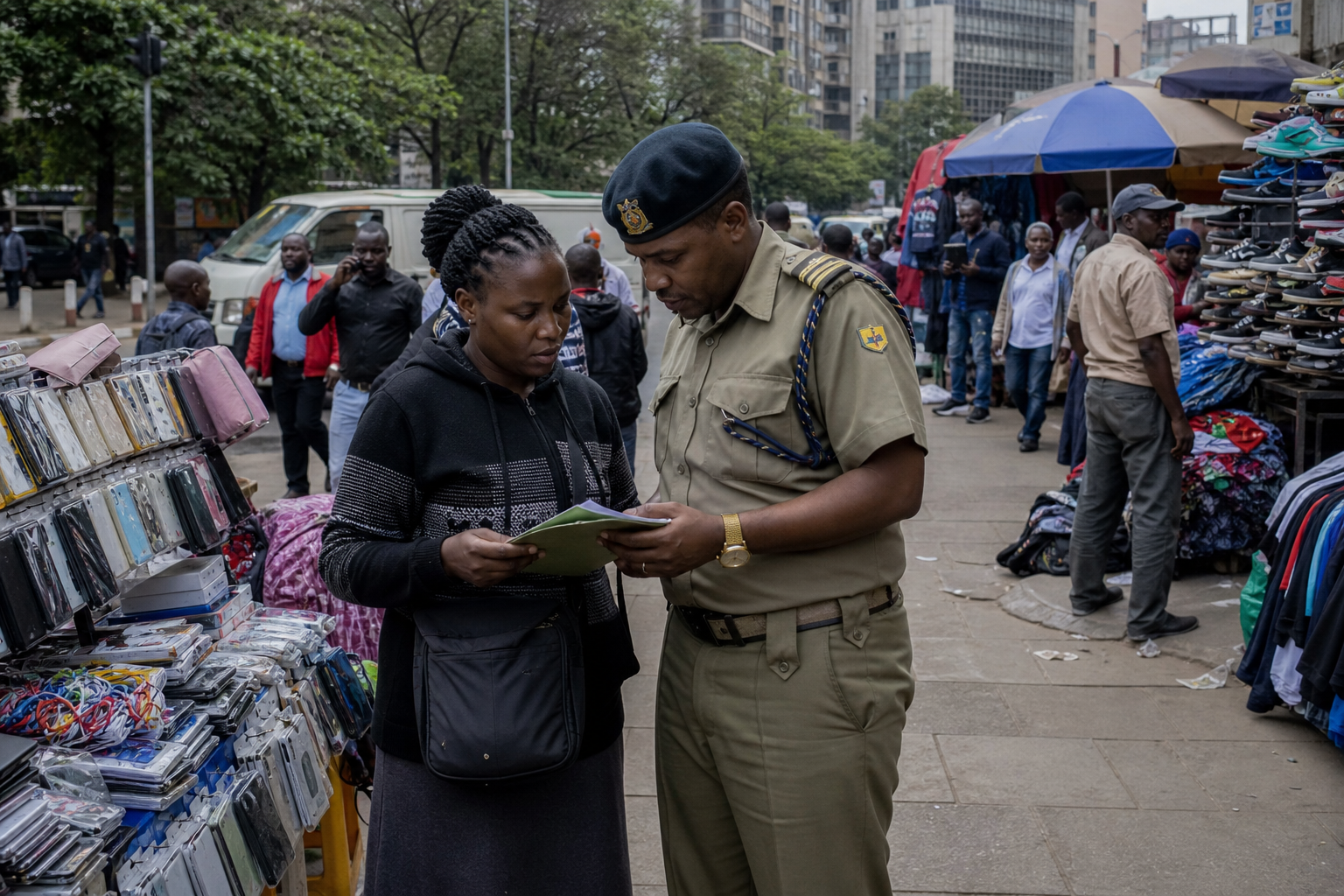
Rules of the Street: How Nairobi Governs Its Informal Trading Hubs
Nairobi’s municipal authorities use strict spatial zoning, daily permits, and non-trading zones to govern the informal street economy across the central business district.

Nairobi’s central business district operates under a strict urban planning and regulatory framework that limits where informal traders can set up business. Under current municipal bylaws, informal trading is largely prohibited along major arterial roads in the city center, including Kenyatta Avenue.
The Nairobi City County Government uses a combination of spatial zoning policies, daily fee collections, and designated market spaces to manage micro-enterprises. Municipal enforcement officers, commonly referred to as kanjo, enforce these boundaries to keep pedestrian footpaths clear and maintain traffic flow in high-density commercial corridors.
Tensions often arise when the supply of legal trading spaces falls short of demand from urban vendors. Recent disruptions along Kenyatta Avenue highlighted the ongoing friction between municipal authorities and street vendors over space allocation and operational boundaries in the capital.
How does licensing work?
Informal traders operating within Nairobi are required to comply with county trade licensing regulations. The county government issues specific permits depending on the nature of the business, ranging from temporary hawking licenses to fixed market stall allocations.
Municipal revenue officers collect daily operational fees from registered vendors in designated zones. Operating outside these demarcated zones without a valid permit exposes traders to impoundment of stock, fines, or arrest by county enforcement teams.
Urban planners divide the city into formal retail zones, designated informal markets, and non-trading corridors. Primary avenues in the central business district are designated as non-trading zones to prevent vehicular congestion and safeguard formal storefront retail operations.
Why is space contested?
The pressure on Nairobi’s street economy stems from rapid urbanisation and limited formal employment opportunities. Micro-enterprises rely heavily on high footfall areas near transit hubs and main thoroughfares to maintain daily income.
County authorities face the dual challenge of accommodating informal livelihoods while maintaining urban order and protecting formal businesses that pay higher annual single business permits. When vendors spill over into prohibited zones, municipal teams step in to clear footpaths, frequently leading to confrontations.
Urban planning experts note that designated markets situated outside the central business district often suffer from lower customer traffic. As a result, traders frequently return to major arterial roads to access daily consumers, despite the risk of enforcement actions.
What changes are expected?
The Nairobi City County Government has been reviewing strategies to integrate informal traders into the formal urban economy without disrupting central business operations. Proposals include constructing modern multi-storey market hubs and introducing digital identification badges for licensed vendors.
City planners are also exploring time-based trading models, where specific streets are opened to informal vendors during off-peak evening hours. This approach aims to balance the space requirements of small traders with the operational needs of formal commercial establishments.
County officials maintain that adherence to urban planning bylaws is essential for city safety and infrastructure management. Dialogue between vendor associations and county representatives remains the primary path toward establishing workable trading zones across the capital.