“A Technical Benchmark”: Why Grand Theft Auto VI Could Redefine Gaming Technology
As the global video game industry watches closely, the upcoming launch of Grand Theft Auto VI promises to push the boundaries of digital rendering, artificial intelligence, and open-world design.
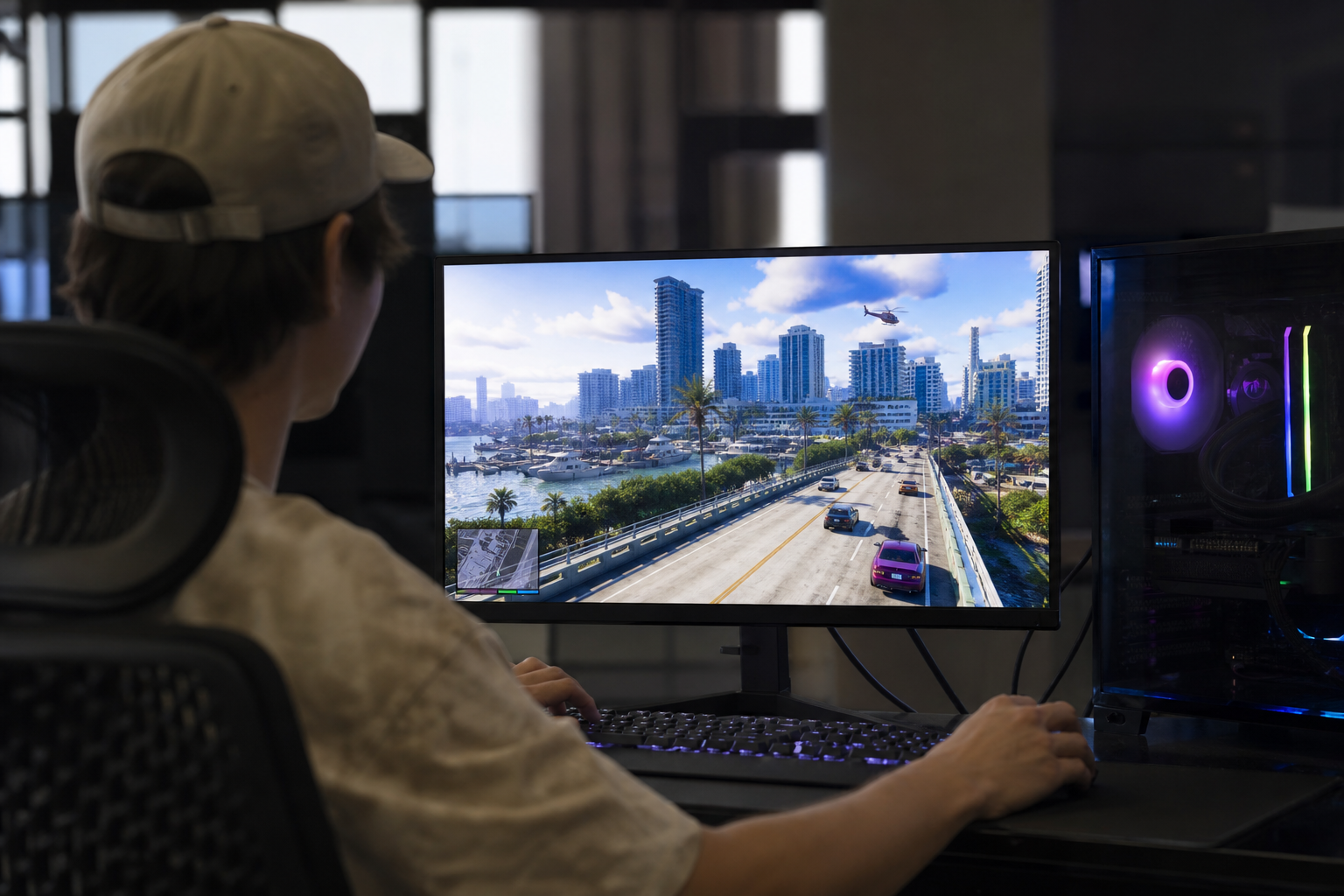
A shift is taking place in how developers build open-world environments. The expected arrival of Grand Theft Auto VI is drawing attention across the global gaming industry as a benchmark for next-generation technology, visual fidelity and world design.
Engineers and creative designers are watching the title closely to see how far interactive environments can be pushed. The release is widely anticipated to set new technical standards for dynamic lighting, artificial intelligence systems and structural rendering across high-performance consoles and personal computers.
The financial scale behind the project underlines the stakes. Analysts estimate that development and marketing budgets for the flagship release run into hundreds of millions of dollars, with total investments projected near $1 billion (about KSh 129.4 billion).
What Changes Now?
Building realistic virtual cities requires massive computational power. Modern games rely on complex algorithms to handle pedestrian routines, real-time traffic physics and weather transitions without dropping performance frame rates.
Industry observers expect the upcoming title to demonstrate major leaps in density and environmental interactivity. Rather than relying on repetitive non-player character patterns, advanced machine learning tools allow background characters to react dynamically to player decisions and spatial changes.
Hardware capabilities have matured to support these technical demands. Modern graphics chips utilizing hardware-accelerated ray tracing allow developers to simulate natural lighting and reflections in complex urban settings, replacing traditional pre-rendered tricks.
Why It Matters?
The technological shifts seen in top-tier releases frequently filter down across the wider interactive entertainment industry. Independent studios and mid-sized developers regularly adopt the rendering techniques and animation tools pioneered by mega-budget projects.
Beyond pure visuals, the title represents a critical test for consumer demand in high-end entertainment. A successful launch demonstrates that audiences remain willing to pay premium prices for deeply detailed, single-player and multiplayer virtual worlds.
What Happens Next?
The broader video game market faces rising production costs and longer development cycles. As top studios spend up to seven years building a single title, success depends on achieving long-term player engagement through ongoing online updates.
Publishers are watching whether the technological leap translates into sustainable commercial returns. The performance of major releases often influences how investment funds allocate capital across interactive media, digital graphics software and cloud computing infrastructure.
Over the coming months, technical previews and performance tests will show whether the game meets its high design expectations. Its launch will provide clear metrics on whether high-end hardware can deliver the promised generation of interactive entertainment.