Behind the Medal: How Global Supply Chains Shape Major Sports Events
Mass-participation sporting events rely on complex global supply chains to produce thousands of custom items. Here is how international manufacturing networks manage quality control and high-volume delivery.
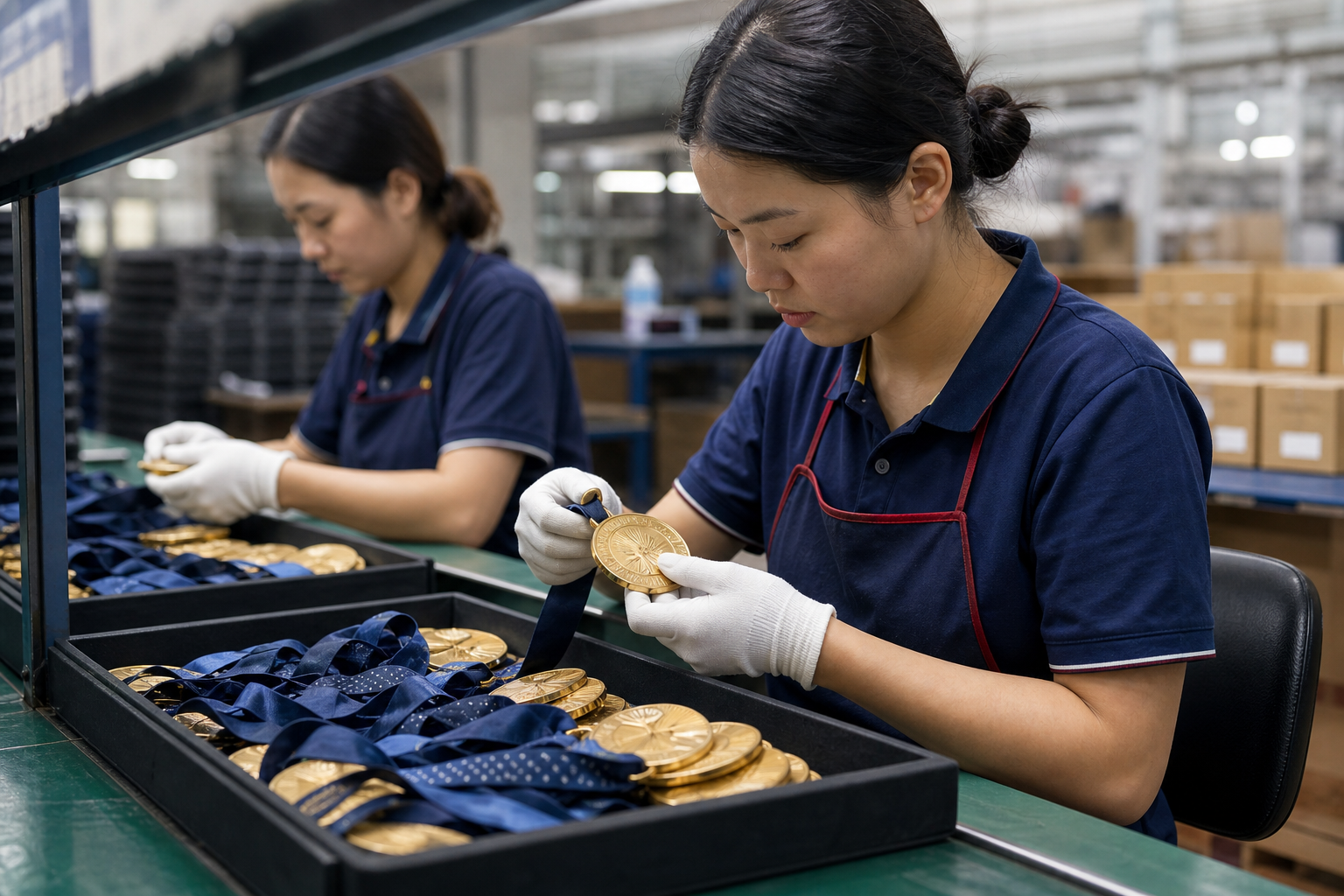
The production of mass-participation sports event memorabilia relies on tightly managed global supply chains. For major international marathons, endurance races, and global tournaments, organizers must coordinate international manufacturing networks to design, mint, and transport thousands of custom items months before race day. (Citizen)
When large-scale events operate across multiple continents, quality assurance processes serve as the primary safeguard against logistical errors. Manufacturing contracts for major events typically involve overseas foundries, precise digital proofing, physical prototyping, and multi-stage inspections before bulk shipments depart factories.
Organizers managing mass-participation logistics balance high volumes against strict publication deadlines. When custom orders involve thousands of units, supply chain partners utilize specialized metal casting, automated engraving, and strict batch-testing procedures to maintain standards across the entire production run.
How Do Supply Chains Operates?
The manufacturing lifecycle of race memorabilia begins months prior to the scheduled event. Event directors partner with specialized merchandise agencies to establish digital vector artwork, material specifications, and ribbon attachments.
Once initial designs receive approval, manufacturing transfers to specialized casting foundries. These facilities create master dies to strike or cast metal alloys, usually combining zinc alloy, brass, or iron depending on budget allocations and structural design requirements.
Physical sample proofs undergo manual evaluation before bulk production commences. Quality control technicians inspect sample weight, plating finish, color enamel accuracy, and text integrity to verify that production specifications match the approved digital design.
What Causes Production Errors?
Logistical vulnerabilities in international manufacturing typically emerge during standard transitions between initial design verification and mass factory casting.
Communication breakdowns across vendor networks, unverified digital proofs, or automated casting updates without physical sampling represent frequent points of failure. High-volume runs require physical inspection at the foundry level; relying solely on digital visual clearance increases the probability of systemic errors.
When errors pass undetected through early production stages, thousands of finished pieces enter bulk shipping containers without physical verification. Freight timelines often leave little margin for re-casting or localized correcting once shipments arrive at host cities.
How Is Quality Managed?
Modern sporting events employ multi-tiered verification systems to inspect event inventory upon arrival. Logistics protocols require event teams to conduct randomized sampling across incoming freight shipments prior to distributing inventory to race hubs.
Industry-standard quality assurance protocols include visual text verification, weight consistency testing, and ribbon attachment stress tests. Advanced vendors deploy automated optical inspection systems during the factory casting phase to detect typographical or structural flaws on the production line.
When manufacturing flaws are identified post-delivery, event organizers face logistical choices: localized retrofitting, complete emergency re-manufacturing, or proceeding with public distribution while issuing public clarifications.
What Happens Next?
Major event organizers continue to adjust supply chain frameworks to mitigate production risks. Many international races are shifting toward regional manufacturing hubs to reduce transit times and enable faster hands-on quality audits.
Digital verification tools and automated inspection scanning at source foundries are becoming standard requirements in event procurement contracts. By tightening oversight between design software and physical casting machinery, organizers aim to protect the operational integrity of major sports events.