Beyond the Ruins: How Insurance and Zoning Shape Post-Fire Recovery
When commercial property burns, physical clearing is only the first step. Rebuilding depends on complex insurance assessments, municipal zoning codes, and strict fire safety regulations.
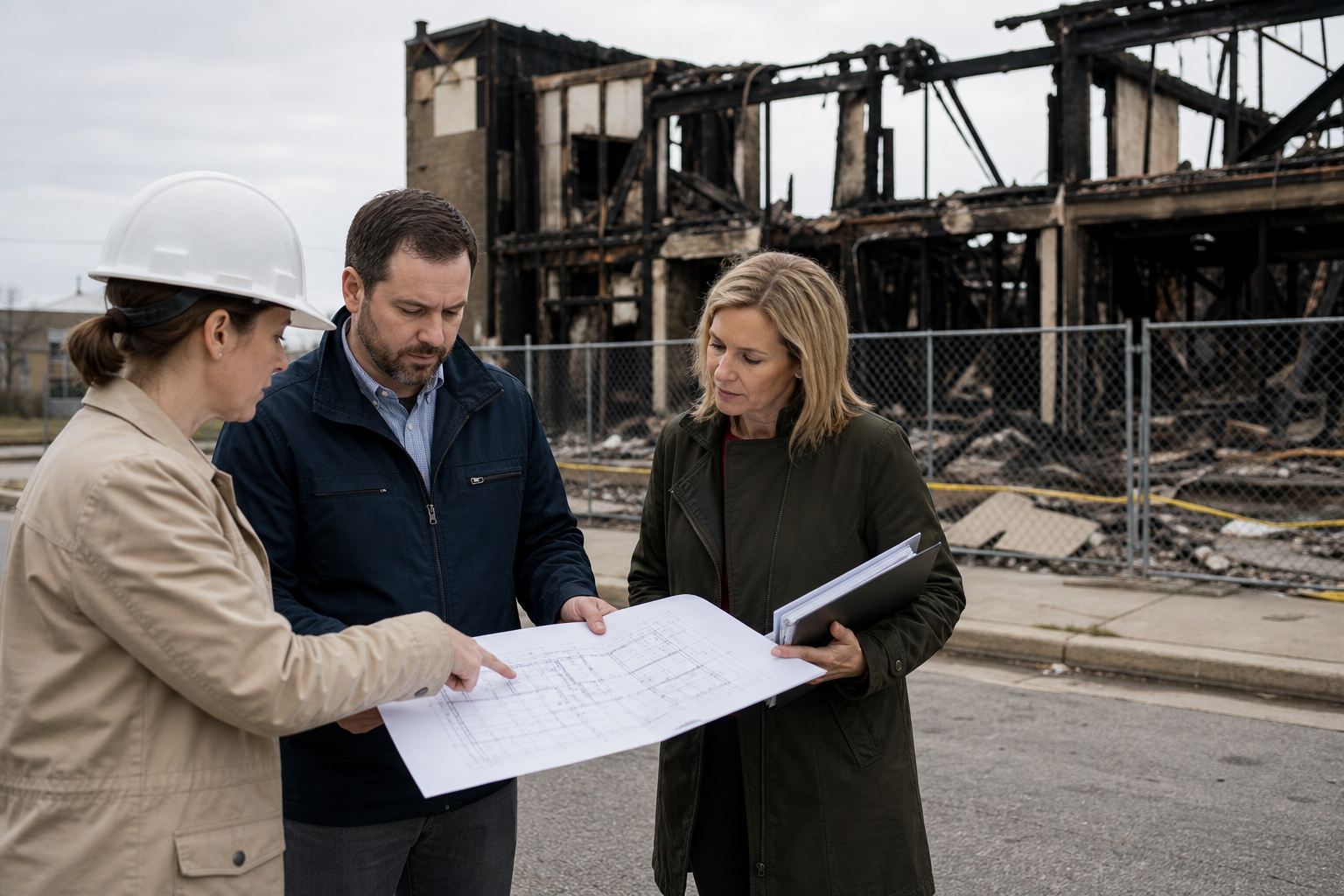
When a catastrophic fire flattens a commercial strip, the visible destruction is only the first phase of a community crisis. Rebuilding commercial property after a major blaze presents immediate structural, regulatory, and financial hurdles that dictate whether small enterprises can survive.
The economic aftermath of severe urban fires illustrates a stark reality: physical recovery depends far less on clearance crews than on complex institutional frameworks. Small-business owners must navigate structural safety inspections, insurance settlements, and municipal planning guidelines before laying a single brick.
Understanding the mechanisms behind commercial post-fire recovery highlights why some commercial hubs rebuild rapidly while others remain vacant for years.
How Does Insurance Function?
Commercial property insurance serves as the financial backbone of post-fire reconstruction, yet payout delays often stall recovery. Insurers typically mandate exhaustive forensic investigations to determine the origin and cause of a fire before approving structural claims.
Business interruption coverage plays a pivotal role during this period. While property damage coverage pays for physical repairs to building materials, business interruption insurance covers ongoing operational expenses, including payroll and debt obligations, while premises remain closed.
Businesses lacking comprehensive business interruption policies face severe liquidity shortages within weeks of a fire. Claims processing requires meticulous inventory accounting, which creates administrative friction for small traders whose physical records may have been destroyed in the blaze.
Why Do Zoning Laws Matter?
Municipal planning frameworks dictate how, where, and when property owners can rebuild. Following a major fire, local authorities require strict compliance with updated building codes, structural engineering standards, and fire safety regulations.
Zoning laws frequently change between the initial construction of a commercial property and its destruction. If municipal guidelines have shifted to require larger setback distances, increased emergency access routes, or updated fire suppression infrastructure, property owners cannot simply replicate the original structure.
These regulatory requirements frequently increase total reconstruction costs. Upgrading a site to meet current safety codes can create significant capital deficits for owners whose insurance policies only cover the actual cash value of the previous structure rather than modern compliance upgrades.
What Slows Physical Reconstruction?
The timeline for restoring a burnt commercial site stretches across several distinct phases. Initial site stabilization and hazardous material containment must take place under municipal oversight before demolition equipment enters the area.
Safety inspectors must certify that surrounding structures, public walkways, and subterranean utilities are secure. In multi-tenant commercial zones, disputes between landowners, leaseholders, and adjacent property owners frequently lead to legal standstills over shared boundary walls and structural liabilities.
Accessing replacement capital presents another structural bottleneck. Property owners often must secure secondary loans or commercial financing to bridge the shortfall between insurance settlements and modern rebuilding costs, delaying site clearance and structural work.
What Happens Next?
Urban planners and municipal fire authorities are increasingly revising commercial zone rules to incorporate strict fire prevention infrastructure. Future urban planning models prioritize integrated suppression systems, fire-resistant building materials, and wide access corridors to prevent localized blazes from consuming entire commercial blocks.
For small-business communities, long-term economic resilience relies heavily on regulatory efficiency. Streamlining municipal permit approvals and standardizing insurance claim assessments remain critical steps to shorten the transition from ruin to functional commercial activity.