Fragile Foundations: The Physics Behind Himalayan Glacial Lake Outbursts
High-altitude glacial lake outburst floods represent a severe hydro-geological risk in mountain environments. Here is a technical breakdown of how thawing permafrost, slope instability, and hydraulic pressure combine to breach natural dams.
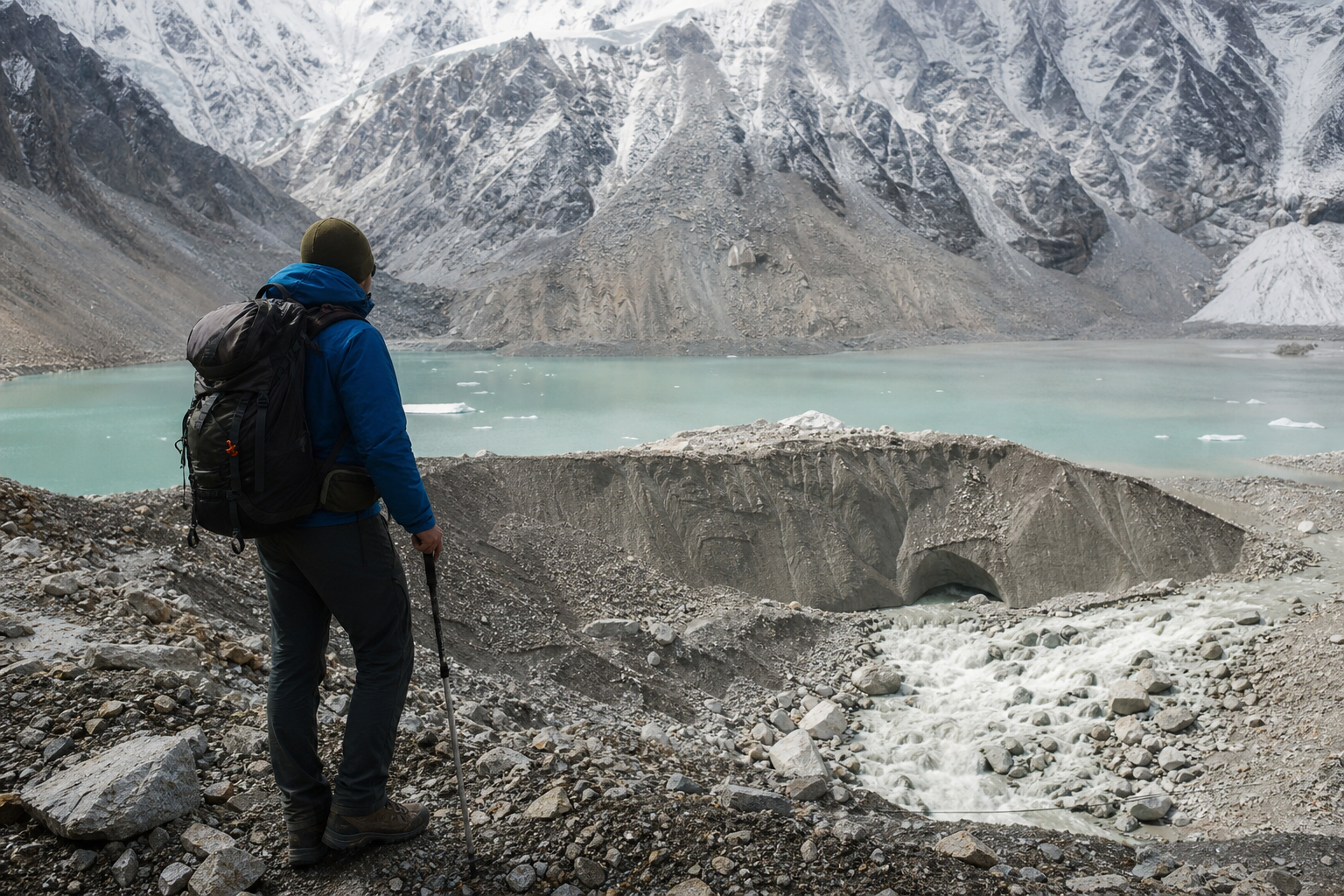
High-altitude glacial lake outburst floods represent one of the most violent hydro-geological events in alpine environments. These sudden hydrologic releases occur when natural impoundments holding back glacial meltwater fail catastrophically, discharging millions of cubic metres of water and debris into downstream valleys within hours. (Nbcnews)
Understanding these events requires examining the structural integrity of high-altitude terrain, where frozen soil and bedrock act as the primary structural cement. In these delicate environments, delicate balances hold vast volumes of water elevated thousands of metres above populated valley floors.
The mechanical triggers behind outburst floods involve complex thermodynamic and physical processes operating across mountain ecosystems.
What Weakens Mountain Walls?
Permafrost describes ground, soil, or rock that remains at or below 0°C for two or more consecutive years. In high-mountain ranges, this permanently frozen sub-surface material acts as a structural bonding agent, cementing unstable scree, boulders, and fractured bedrock along steep mountain slopes.
When atmospheric temperatures rise, deep sub-surface warming degrades this ice-cemented matrix. As ground temperatures cross critical thresholds, the interstitial ice within rock fractures begins to melt. This process reduces shear strength along geological joint planes, drastically lowering the mechanical resistance of mountain walls.
Thermal degradation does not happen overnight. Heat transfers slowly through rock and soil layers, meaning that warming over preceding years creates delayed structural instability. When deep permafrost thaws, large volumes of rock and ice can detach without warning, cascading into high-altitude catchments located directly below unstable headwalls.
How Do Lakes Collapse?
Most high-altitude glacial lakes are contained not by solid bedrock, but by natural dams called moraines. These barriers consist of unconsolidated loose rock, gravel, and sediment deposited by retreating glaciers over decades. Because moraine walls are uncompacted, they are structurally vulnerable to internal erosion and external physical impacts.
A glacial lake outburst flood typically follows a cascading mechanical sequence:
- Mass Detachment: Deep permafrost thawing destabilises a slope, causing a massive slope failure involving millions of tonnes of rock, ice, and debris.
- Displacement Waves: The falling mass impacts the surface of a glacial lake at high velocity, generating massive displacement waves that surge across the basin.
- Moraine Overtopping: These displacement waves spill over the crest of the loose moraine dam.
- Rapid Incision: The overtopping water rapidly erodes the outer face of the moraine wall, carving a deep channel into the loose sediment.
- Catastrophic Breach: Water flowing through the newly cut channel accelerates internal erosion, causing the dam structure to collapse and draining the lake rapidly.
Why Risk Is Escalating?
The expansion of high-altitude lakes combines with degraded rock slopes to elevate systemic risks across mountain regions. As alpine glaciers retreat, they leave behind expanding depressions that fill with meltwater, creating larger surface areas and higher storage volumes directly beneath destabilised headwalls.
Simultaneously, rising surface temperatures alter regional hydrology. Increased liquid precipitation at higher elevations accelerates the thermal degradation of snowpacks and frozen ground, introducing free water into rock joints. Hydrostatic pressure inside these fractures builds up, pushing destabilised rock faces further toward structural failure.
The mechanical failure of a glacial dam releases more than just surface water. As the outburst surges down steep valley gradients, it entrains huge quantities of loose sediment, boulders, and organic debris. This process transforms clear meltwater into dense, high-density slurry capable of destroying concrete bridges, hydro-electric infrastructure, and entire settlements positioned tens of kilometres downstream.
What Happens Next?
Mitigating high-altitude hydrological risks requires continuous remote monitoring and geotechnical engineering across vulnerable river basins. Satellite radar monitoring, early-warning sensor arrays, and engineered drainage channels are increasingly deployed to artificially lower water volumes in high-risk glacial lakes before critical thresholds are breached.
As seasonal thermal pressures continue to penetrate deeper into mountain bedrock, identifying unstable rock slopes before catastrophic failure occurs remains a primary challenge for geoscientists. Further research into sub-surface thermodynamics will determine how alpine communities adapt to changing high-altitude hazards.