“A Unified System”: Somalia Launches First National Health Facility Registry
Somalia has launched its first unified national registry of health facilities, creating a centralized system to track medical infrastructure, streamline emergency responses, and improve healthcare delivery across the country.
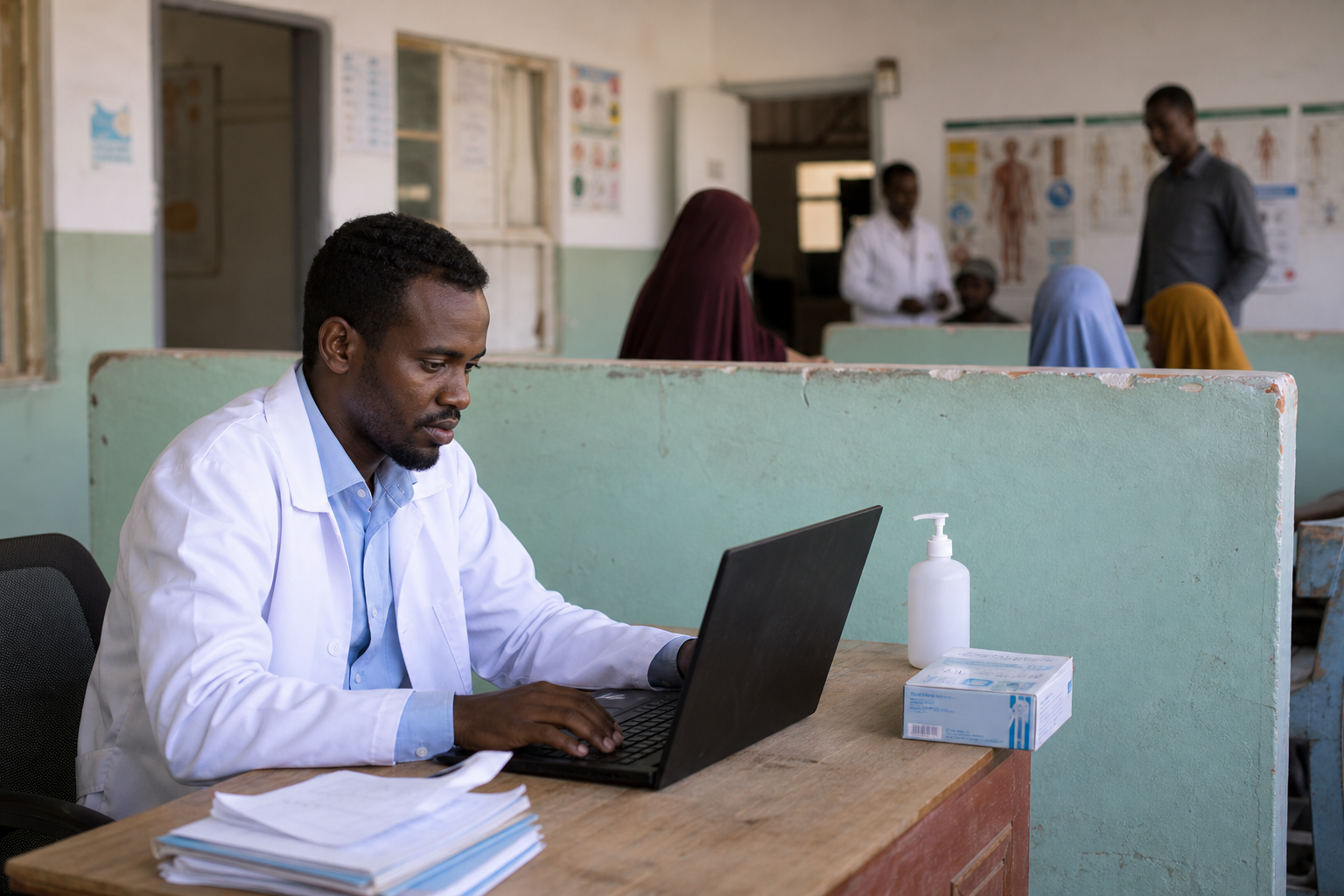
Somalia has launched its first unified national registry of health facilities, establishing a central database designed to track, manage, and expand medical services across the country.
The national registry aims to consolidate data on public and private clinics, hospitals, and primary care centers into a single operational system.
Federal authorities intend for the unified system to provide real-time information on the distribution of health infrastructure, available medical personnel, and critical resources.
What Changed?
Historically, Somalia has faced severe fragmentation in its health sector, driven by decades of conflict and decentralized administrative structures. Medical facilities have often operated without centralized oversight, leading to significant gaps in service delivery and resource allocation.
The new framework establishes standardized recording protocols for all functioning medical sites. By centralizing facility profiles, government agencies and international humanitarian partners can identify underserved regions and optimize emergency response coordination.
The system is also designed to streamline regulatory oversight, ensuring that operating licenses and service standards are systematically recorded across all participating regions.
Why It Matters
The deployment of a single database directly affects how domestic budgets and external funding are allocated to medical facilities. Accurate mapping allows planning authorities to direct aid and essential medicines to remote areas that previously lacked documented health infrastructure.
Deficits in health facility infrastructure remain a global challenge.
The initiative also aligns with broader regional efforts in East Africa to strengthen healthcare governance and maternal care partnerships.
What Are The Challenges?
Maintaining an active health registry presents operational difficulties in regions affected by security instability and infrastructure deficits. Conflict continues to disrupt civil administration and public service delivery across parts of the country.
Securing health infrastructure remains a pressing humanitarian issue globally. Tracking released by UN News indicates that attacks on healthcare facilities globally occur at a rate of approximately one every six hours, with minimal accountability for perpetrators. Operating health facilities in fragile environments requires constant monitoring to maintain accurate records of functional infrastructure.
Additionally, consistent data entry relies on reliable electricity, digital infrastructure, and trained administrative personnel, resources that remain scarce in rural districts.
What Happens Next?
Federal health officials will oversee the progressive rollout of the registry across all administrative zones. Field teams are tasking local health authorities with submitting verified facility data to ensure the platform remains up to date.
International technical advisors will continue assisting the government with system integration and data security protocols. Authorities plan to evaluate initial data outputs over the coming months to guide upcoming national health strategies and supply chain deployments.