The Mechanics of Disorder: Mapping Kenya’s Legal Response to Public Violence
Kenyan authorities rely on specific statutory frameworks to address crowd violence and maintain public order. Here is how the legal framework functions when street disturbances occur.
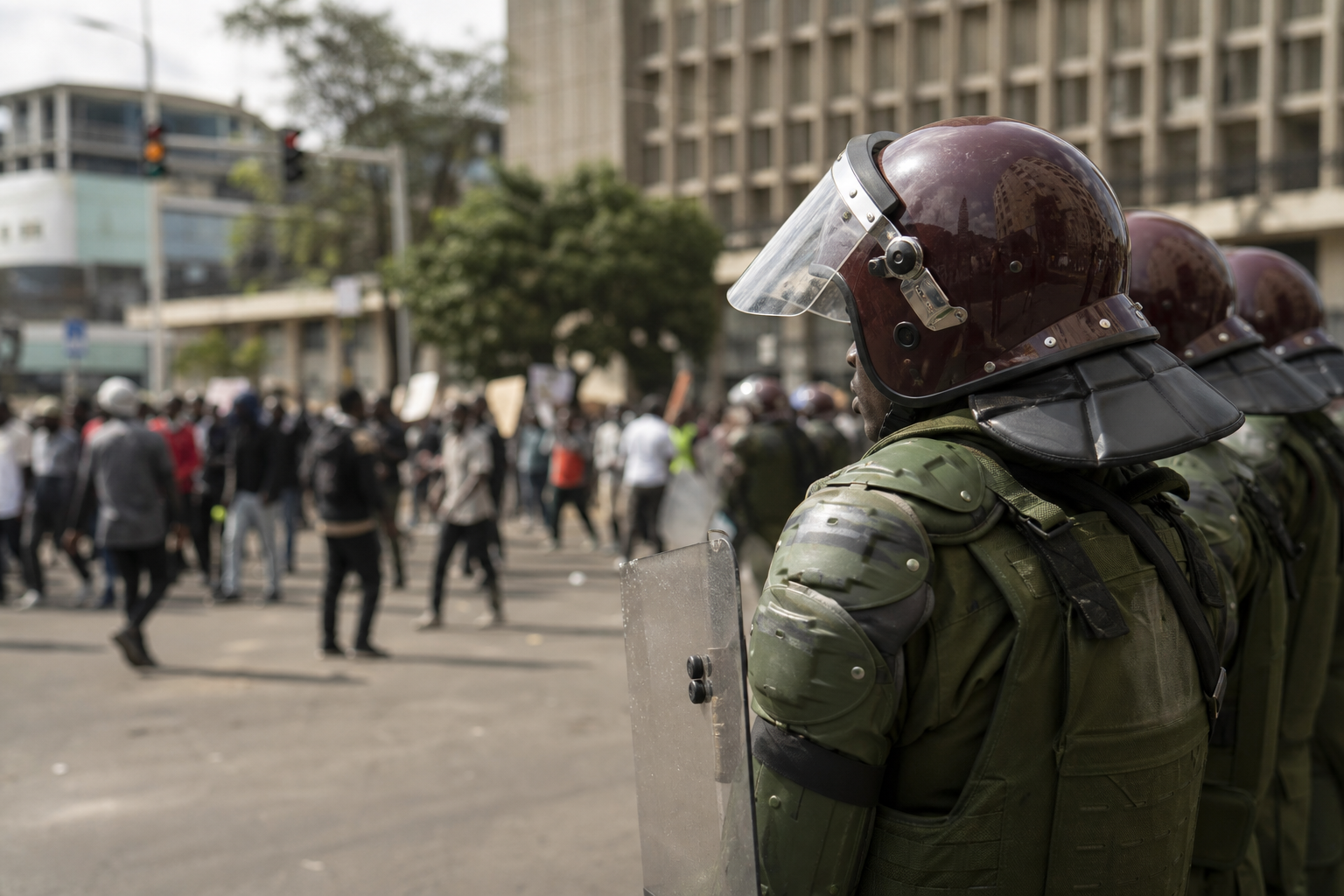
Kenyan authorities face a complex legal and operational environment when addressing episodes of civil unrest and crowd control. When groups involved in public disturbances, often referred to locally as "goons", cause damage or interrupt commerce, law enforcement relies on established statutory frameworks within the Penal Code to restore order. (Standardmedia)
The legal handling of crowd violence requires balancing constitutional protections for assembly with statutory enforcement against public disorder. Police operations during public protests rely on specific offences detailed in national legislation to maintain public safety.
What Laws Apply?
Kenyan criminal law addresses public disorder through distinct provisions outlined in Chapter X of the Penal Code, which covers offences against public order.
The law differentiates between unlawful assemblies and riots. An assembly becomes unlawful when three or more persons gather with a common intent to commit an offence or conduct themselves in a manner likely to cause a breach of the peace.
A riot occurs when an unlawful assembly begins to execute its purpose by disturbing the public peace. Under Section 72 of the Penal Code, participating in a riot carries a statutory penalty of imprisonment for up to two years.
Police officers retain explicit statutory powers under Section 74 of the Code to issue formal proclamations ordering rioters to disperse. Failing to comply with a dispersal order constitutes a felony punishable by up to five years in prison.
How Is Violence Prosecuted?
When public disorder leads to physical violence or property destruction, prosecutors apply individual criminal charges rather than collective group designations.
Property damage incurred during street violence falls under Section 339 of the Penal Code, which deals with malicious injuries to property. The punishment for destroying property ranges from five years to life imprisonment depending on whether buildings, public infrastructure, or dangerous materials are involved.
Assaults committed against civilians or law enforcement officers during public gatherings are prosecuted under Sections 250 through 253. Convictions for common assault carry penalties of up to one year in prison, whilst assault causing actual bodily harm carries a sentence of up to five years.
Incitement to violence remains another statutory tool used by state prosecutors. Section 96 makes it an offence to print, publish, or utter words calculated to bring about death, physical injury, or damage to property, carrying a maximum sentence of five years upon conviction.
What Impedes Enforcement?
Legal experts and law enforcement personnel encounter significant operational hurdles when attempting to process offences committed within chaotic public settings.
Identifying specific perpetrators within large crowds presents evidential challenges for state prosecutors. Courts require clear proof of individual intent and participation, meaning general evidence of crowd presence is insufficient to secure a criminal conviction.
The deployment of private security or armed groups during political demonstrations further complicates police responses. Distinguishing between peaceful demonstrators exercising rights under Article 37 of the Constitution and individuals intent on property destruction requires real-time intelligence and systematic evidence gathering.
Statutory enforcement also requires adhering to constitutional standards governing the use of force. The National Police Service Act mandates that officers deploy non-violent means first, reserving proportional force only for situations where non-violent alternatives prove ineffective.
What Happens Next?
Legal scholars and public policy institutions continue to debate proposed reforms to Kenya's public order architecture.
Discussions focus on updating statutory provisions to address coordinated violence organised through digital platforms. Prosecutorial agencies are increasingly examining how modern electronic evidence, including mobile communications and public surveillance footage, can be used to prove conspiracy and incitement.
Courts are also clarifying the boundaries between constitutional protest rights and statutory public order offences, ensuring that legal mechanisms intended to stop public violence are applied consistently within constitutional parameters.