Tracking the Scent: How K9 Units Assist in Modern Search Operations
Specialised canine units play a critical role in emergency response and search-and-rescue deployments, relying on strict operational protocols and biological tracking capabilities to navigate complex terrain.
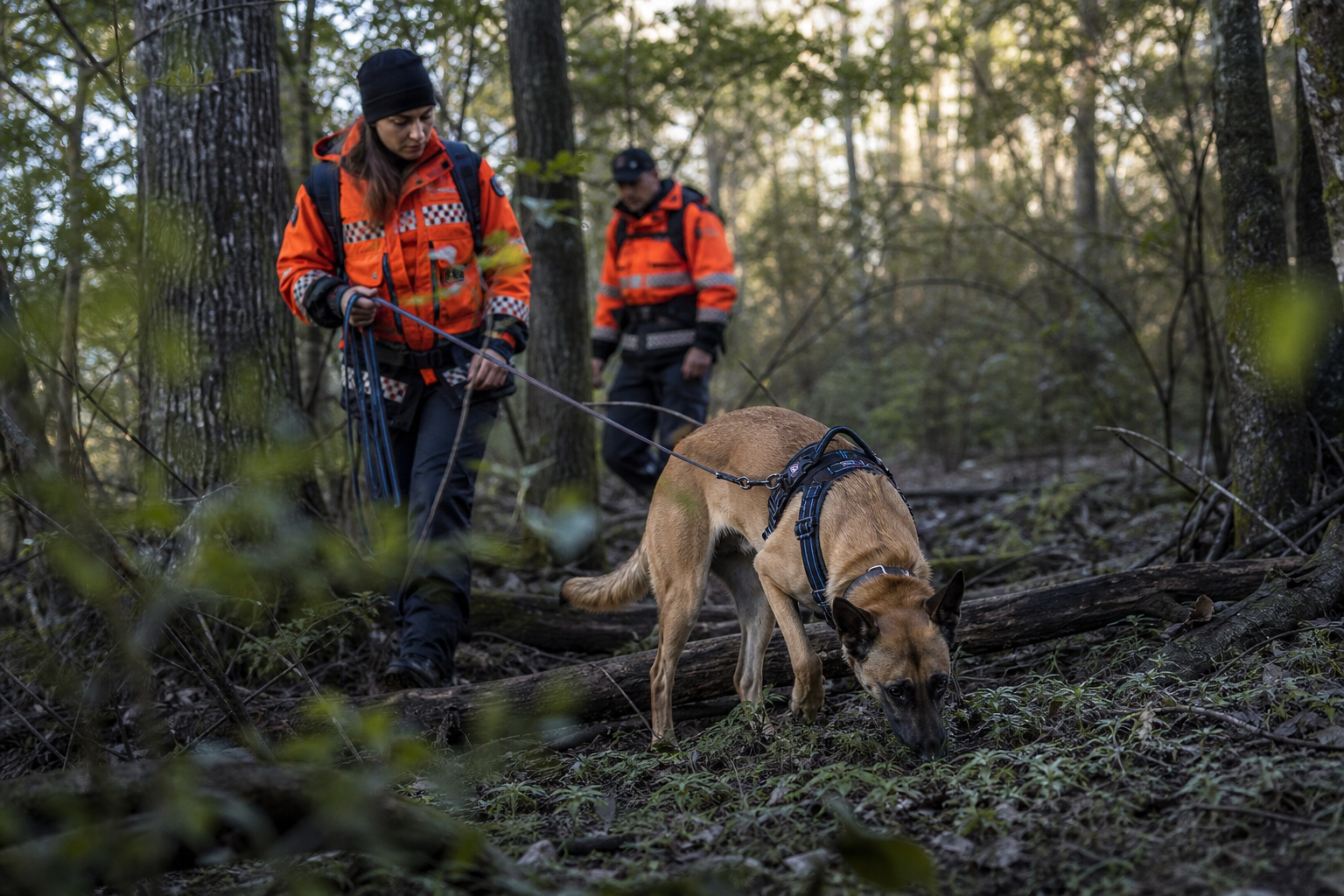
Specialised canine units represent one of the most vital yet technically complex assets within modern security and emergency response frameworks. Across police operations, search-and-rescue (SAR) missions, and disaster response initiatives, trained working dogs provide tactical capabilities that technology cannot fully replicate. (Standardmedia)
In Kenya, deployment of canine assets forms part of the broader administrative and operational strategy within security agencies. While public debate often centres on high-level institutional structures or reform agendas, ground-level tactics rely heavily on specialised units to track missing persons, detect hazardous materials, and navigate difficult terrain during emergencies.
Understanding how these units function requires an examination of their training methodologies, deployment protocols, and the operational integration necessary for successful field missions.
How Do K9 Search Operations Work?
Canine search-and-rescue operations rely on the highly developed olfactory senses of trained working dogs. Canines possess hundreds of millions of sensory receptors in their nasal cavities, allowing them to detect minute scent traces that escape human perception or electronic sensors.
Standard operating procedures split search-and-rescue dogs into two distinct categories: air-scent dogs and tracking or trailing dogs. Air-scent canines work untethered to detect human scent suspended in the atmosphere over wide geographic areas. Trailing dogs follow specific scent particles left on the ground or vegetation by a specific individual using a target scent article.
During deployment, handlers must account for environmental variables such as wind direction, humidity, ambient temperature, and terrain elevation. High humidity typically preserves scent trails, while heavy rain or extreme heat can dissipate organic compounds rapidly. Handlers continuously monitor scent lines to map potential search corridors for ground teams.
What Are the Operational Protocols?
A standard search-and-rescue deployment follows a strict sequence of operational protocols designed to secure evidence and maintain search efficiency:
- Scene Preservation: Responding units secure the initial point of last sight to prevent cross-contamination of scent traces by bystanders or emergency personnel.
- Scent Acquisition: Handlers present a clean target scent article to the trailing canine under controlled conditions.
- Sector Search Grid: Ground commanders establish coordinate grids, allowing handler teams to systematically sweep targeted sectors without overlapping or leaving gaps.
- Handler Verification: Handlers interpret subtle behavioural shifts in the dog, known as "change of behaviour," which signal that the canine has encountered the target scent plume.
- Support Logistics: Tactical support units move behind the K9 team to maintain perimeter security, manage communications, and provide medical or logistical backup.
Integrated operations require clear coordination between canine handlers, air support, and ground rescue teams to ensure rapid extraction once a location is identified.
What Strategic Value Do They Provide?
The tactical integration of specialised canine teams offers significant resource advantages during complex search missions. A single operational K9 team can cover vast expanses of dense bushland, forested areas, or urban debris fields in a fraction of the time required by human search lines.
Beyond primary search tasks, canine units perform critical roles in border control, explosive detection, and tactical entry support. Security agencies allocate resources to maintain specialized kennels and veterinary support structures to sustain these operational capabilities.
As disaster management strategies evolve across the region, institutional investment in handler training, international search standards, and field logistics remains central to enhancing search-and-rescue effectiveness during critical incidents.
What Happens Next?
The development of search-and-rescue capabilities remains tied to broader operational efficiency, structural resources, and specialized training within public safety institutions. Standardisation of response protocols across emergency management bodies continues to guide the integration of tactical units on the ground.
Future operations will increasingly rely on combining handler expertise with real-time GPS tracking and aerial reconnaissance to streamline response timelines during emergency missions.